
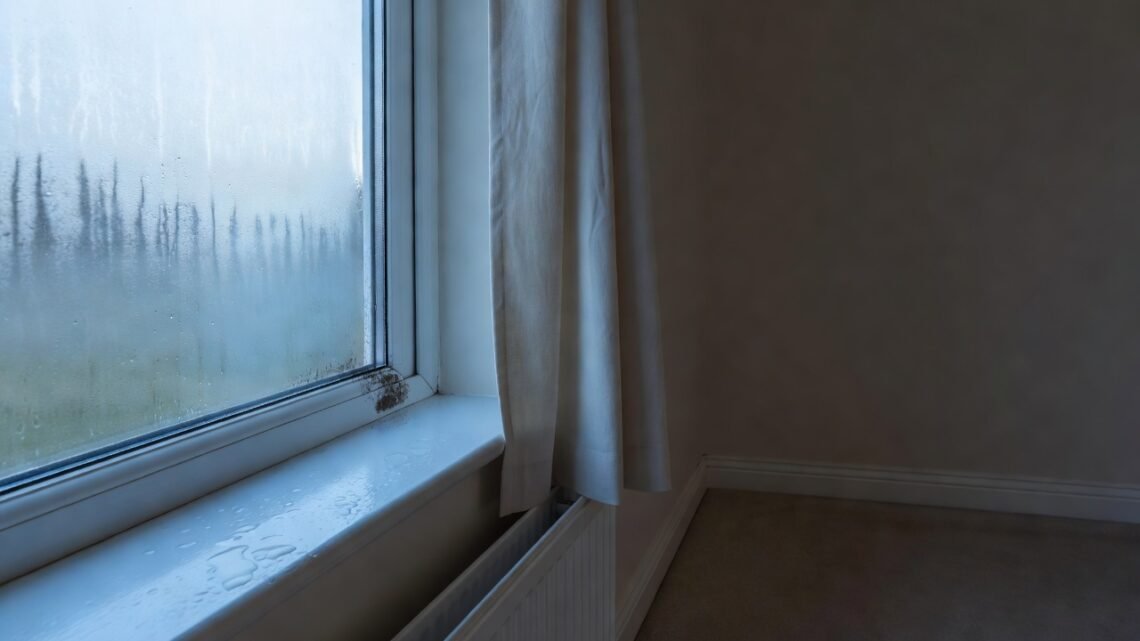
Short answer: Condensation is water from indoor air settling on cold surfaces. In winter it is the usual reason mould appears on windows, silicone seals, outside walls and behind furniture. You can cut a lot of it by making less moisture, extracting steam at source, and keeping rooms steadily warm and aired. Widespread mould, a leak, or symptoms in a vulnerable person all call for prompt action, not another wipe.
In this guide
- How condensation forms
- Where the moisture comes from
- Why winter makes it worse
- Daily habits that cut moisture
- Ventilation and heating
- Cleaning small patches of mould
- When it is not just condensation
- When to get help
- If you rent
- What damp means for health
- FAQ
- Sources
How condensation forms
Air always carries water vapour, and warm air holds more than cold air. When that air meets a surface cold enough to cross the dew point, the vapour turns to liquid water. You see it as mist on a bathroom mirror, beads on a bedroom window, or a damp film on an outside wall.
Through a British winter the same process runs in the background. Cooking, washing and drying laundry keep adding vapour, and if it is not extracted the humidity climbs. The coldest surfaces hit dew point first: single glazing, the edges of double glazing, metal frames, solid uninsulated walls, lintels and external corners.
Condensation and mould are linked, but they are not the same thing. Condensation is the water. Mould is a fungus that grows where a surface stays damp and there is dust, paint, plaster, silicone or wallpaper paste to live on. Dry the surface and stop the wetting, and everyday surface mould is much less likely to hang on. Leave the surface damp and a wipe will not last.
A thermo-hygrometer shows temperature and relative humidity. UK housing advice often suggests an indoor band of roughly 40 to 60 percent. A spike after a shower is normal. Watch for a bedroom that stays well above that band overnight. Meters vary, so treat the trend as the clue, not a single number.
Where the moisture comes from
Most winter condensation comes from ordinary living, not from a hidden flood. Common sources are:
- Breathing and perspiration, especially in a shut bedroom overnight
- Boiling and frying with lids off
- Showers and baths
- Clothes dried on radiators or airers in lived-in rooms
- A tumble dryer blowing into the room, or a hose that has come loose
- Portable bottled-gas and paraffin heaters, which release water vapour as they burn
A home that cooks, showers and dries washing inside can add several litres of water to the air in a day. The amount varies with the household, so one neat figure would mislead. Glass that streams after a shower is showing you where that vapour was made.
Some moisture is a fault. A weeping pipe, a failed shower seal, or a trap that stays wet will keep one patch damp when the rest of the home is dry. If the mark is local and constant, look for that fault before you blame the season.
Why winter makes it worse
Cold outdoor air cools glass, frames and external walls. Windows stay shut for longer, and heating often runs in bursts, so those surfaces sit below dew point for much of the day and night.
The room can feel fine at chest height and still grow mould near the skirting. Furniture tight on an outside wall stops air moving and keeps the plaster cold. Wardrobes on outside walls do the same on the inside of the cupboard.
Double glazing is warmer, so moisture may leave the pane and appear on a cold frame or a solid wall. That is the cold surface moving, not new water appearing from nowhere. Open curtains by day and wipe a sill that pools. A curtain held against wet glass can trap water on the pane.
Loft insulation must not block the eaves vents. A roof space with no airflow can collect condensation under the tiles. That is a roof job, not a job for a cloth and a household cleaner.
Daily habits that cut moisture
You do not need building work to cut a lot of condensation. Catch the vapour as it is made.
In the kitchen
Use lids. Use the cooker hood if a duct carries the air outside. A recirculating hood, the kind with a filter and no duct, leaves the water in the room. If no duct leaves the building, the moisture is still in the kitchen.
In the bathroom
Shut the door so steam does not drift into colder bedrooms. Run the extractor from before you start until 15 to 20 minutes after you finish. If the fan dies with the light switch, an overrun timer is a normal small repair to ask for. Open the window as well if the fan is weak or missing. Wipe pools off the screen and tiles so they do not evaporate back overnight.
Laundry
Dry clothes outside when the weather allows. If it does not, use one room, keep the door shut, and ventilate that room rather than the whole house. A working condenser or heat-pump dryer collects water in a tank or a drain. A dryer that empties into the room, or wet clothes spread across every radiator, will load the air with vapour.
Wipe morning condensation off windows and sills before it soaks the paint. Leave a gap behind furniture on outside walls, and leave trickle vents open. A dehumidifier can help in the closed room where clothes are drying, if you empty it. It will not mend a leak or replace a fan that should vent outside.
Ventilation and heating
Useful ventilation is planned fresh air, not a house full of draughts you cannot steer. Extract should take kitchen and bathroom steam outdoors. Trickle vents and air bricks that are still open let replacement air in, so the fan has something to move.
A fan that cannot lift a tissue is not extracting. Look for a stuck outdoor flap or a crushed duct. A duct that blows into the loft leaves moist air in the roof space, which is how condensation starts above the ceiling. Clean the grille, confirm the outlet is outside, and treat a dead fan as ordinary maintenance.
Air rooms in short bursts. Open windows wide for a few minutes rather than leaving one on the latch all day. Winter air outdoors typically holds less water than warm indoor air, so the swap carries moisture out. The walls still hold most of their heat, and the room recovers. An all-day draught cools the fabric and sets up the next film of water. Air in the morning and after cooking or a shower, then close up and warm the room again. There is no single perfect number of minutes.
Heat does a different job from fresh air. Steadier warmth keeps surfaces above dew point for more of the day. A figure often quoted for occupied rooms is around 18°C. Bills, insulation and how you live all change what is realistic, so take that as a reference, not a test. The awkward pattern is a home left very cold and then heated hard for one short spell, or spare rooms left icy with the doors open so bathroom vapour drifts in and settles.
Heat the rooms you actually use, shut doors to cold unused rooms, and keep sofas and long curtains off the radiators. A corner that always grows mould is usually a cold bridge. Move the furniture and keep that wall warmer. Air fresheners and candles do not remove water.
Steadier heating can cost more, and it is reasonable to look at energy use across the home. A generator is not a condensation fix. A fuel-burning generator must never be run indoors: combustion adds water vapour and gases that are dangerous in a closed room. For the cost question, see DIY home energy: can you really cut bills with a generator? Whatever you decide about energy, do not seal every vent in the hope of saving heat. You will keep the moisture in as well.
Cleaning small patches of mould
Small areas on washable paint, tiles or glass can be cleaned at home if you avoid spreading spores. Do not dry-brush, and do not use an ordinary vacuum that blows dust back into the room. Wear washing-up gloves, open the window, and keep children and anyone with asthma out of the room while you clean. Use a product labelled for mould on that surface, follow the label, and do not mix cleaning products. Wash the surface, then dry it.
Colour is not a species test. Several common household moulds look black or dark green, and you cannot name them by eye. Bag and remove soft furnishings, cardboard and perished silicone that stay musty, because porous material often keeps holding growth after a wipe.
Paint, including stain-blocking paint, only hides the colour. Clean and dry a small patch, get the moisture under control, and only then repaint with a finish suited to the room, such as a kitchen or bathroom paint in those rooms. If the area is large, the plaster is soft, or the marks are back within a fortnight of a proper clean, stop scrubbing and find the cause. Repeated cleaning of a wall that is wet for a structural reason ruins the decoration and leaves the damp in place.
When it is not just condensation
Condensation follows baths, cooking and cold nights. Other damp follows rain, a leak, or the way the building meets the ground. The timetable is the clue.
| What you notice | What it often means |
|---|---|
| Water on glass and cold walls after steam, or first thing in the morning | Condensation |
| Patches that darken when it rains, on ceilings, around chimneys or on weather-facing walls | Rain getting in |
| A tide mark and white salts low on a ground-floor wall, often with soft plaster | Rising damp, a bridged damp-proof course, or sometimes a leak |
| A local wet patch by pipes, a shower, a tank or a ceiling | A leak until shown otherwise |
Overflowing gutters, cracked render, slipped tiles and failed seals around windows are common ways rain gets in. The stain usually worsens in wet weather, even if the windows also steam up after a shower. Collecting rain for the garden or for carefully treated household use is a separate project: see how to harvest and purify rainwater at home. A water butt will not dry wet plaster. Clear gutters and a sound roof keep that rain on the outside.
Do not keep using a light or a socket that has been wet. Catch a drip if you can do so safely, and get the leak repaired. A tide mark with salt crystals needs a look at outside ground levels, rainwater pipes and plumbing before anyone injects a chemical damp-proof course. Shop-bought damp-proof paint will not answer which of those is at work.
When to get help
Ask a competent tradesperson, or your landlord, to act if any of these apply:
- There is an active leak you can see or hear.
- Mould is widespread, affects several rooms, or returns soon after a real clean and better ventilation.
- Plaster is soft, wallpaper is peeling in sheets, or wood is rotting.
- A musty smell fills rooms that have no wet window to explain it.
- Someone feels worse at home and better when they are away.
A useful visit starts with the outside of the house, the gutters and the fans, before anyone recommends a particular product. Fans that push dry air in, dehumidifiers and waterproof coatings each help in some homes and do little in others. Ask what cause is suspected, and what should improve if that is right. If you own the home, take a second view before you agree to invasive damp work.
If you rent
Report condensation and mould in writing. An email is enough. Name the rooms, say when it started, note whether it follows rain or daily steam, and list what you already do with fans, windows and laundry. Attach dated photos and keep a copy.
The government guidance on damp and mould for rented housing providers states that these conditions are a risk to health, and that providers should find and deal with the cause rather than blame how residents live. Using extractors, wiping sills and drying clothes with the room ventilated are fair things to ask. They do not excuse a missing fan, a leak, heating that has failed, or a wall that is wet because the building lets water in.
In England, a landlord’s repair duties cover the structure and exterior, and the installations for heating and water, and the home has to be fit to live in. Serious damp and mould can mean it is not. Social landlords also have timed duties under Awaab’s Law, named after Awaab Ishak, who died in 2020 after prolonged exposure to mould in his family’s social home in Rochdale. In the same email, ask how the duties that apply to your tenancy cover this report. Do not rely on a passing message in a group chat.
Wales, Scotland and Northern Ireland set their own housing rules, and private and social tenancies are not always on the same timetable. Check the position where you live. If nothing changes, contact the council team that deals with housing standards. Do not withhold rent as a protest unless a qualified adviser has told you that step is appropriate in your case. Withholding rent can put a tenancy at risk. This is general information, not legal advice.
What damp means for health
Government guidance on damp and mould explains that it can affect the airways and lungs, irritate eyes and skin, and weigh on mental wellbeing. Risk is higher for babies and children, older people, people who are pregnant, and anyone with asthma or another respiratory condition, allergies, or a weakened immune system.
People with breathing problems or weakened immunity should get damp and mould dealt with promptly and speak to a GP about symptoms. That includes a cough, wheeze, shortness of breath or irritated eyes that are worse at home. Do not wait to see whether a new coat of paint changes how someone feels.
This article is general information, not a diagnosis. A GP is the right person for symptoms. Medicine does not dry a wet wall: the building still has to be put right.
FAQ
Is window condensation always a building defect?
No. Misted glass after a shower is common, including in sound homes. It points to a building problem when mould is widespread, when patches do not follow daily steam and cold surfaces, or when rain and leaks are involved.
Does opening windows in winter make mould worse?
A few minutes with the windows wide open usually helps, because outdoor winter air typically holds less water and carries moisture away. A window left ajar all day cools the walls, which can bring the next round of condensation sooner. Air briefly, then heat the room again.
Can I paint straight over the marks?
No. Paint hides the colour, and growth can continue underneath or beside it. Clean and dry a small area, get the moisture under control, and only then repaint. A large area needs the cause found first.
Is a dehumidifier enough on its own?
It can lower humidity in one closed room, which helps while clothes dry, if you empty it or it drains away. It will not repair a leak, warm a cold bridge, or stand in for a fan that should blow steam outside. Use it as a support, not the whole plan.
Who has to deal with mould in a rented home?
You should report it and take reasonable daily steps, such as using the fan you have and not drying clothes in a sealed room. The landlord is responsible for repairs, for heating and ventilation that work, and for a home that is fit to live in. In England, government guidance tells housing providers to deal with the cause and not to stop at blaming lifestyle.
Does black mould mean one particularly dangerous species?
Not by colour alone. You cannot identify a mould by eye. Widespread growth, mould that keeps returning, or symptoms are already reason to act, to report it if you rent, and to speak to a GP if anyone feels unwell. You do not need a Latin name before you raise it.
Sources
Health effects and the expectations placed on rented housing providers are drawn from Damp and mould: understanding and addressing the health risks for rented housing providers (GOV.UK). Housing rules differ across the UK, so check the duties that apply where you live.


