Affiliate disclosure: This article contains affiliate links. We may earn a commission if you purchase through them, at no extra cost to you.
Choosing a liquid herbal supplement well comes down to four things: reading the label carefully, checking who makes the product and how it is tested, working out the true daily dose and cost, and keeping your expectations realistic. Unlike medicines, herbal supplements in the UK are not automatically tested for purity or potency before they reach the shelves, so the job of judging quality falls largely on you as the buyer. This guide walks through each step, and shows how to apply it to any liquid drops product, using one example option for comparison.
Key takeaways
- In the UK, look for the Traditional Herbal Registration (THR) mark or clear third-party testing information; quality control varies widely between products.
- “Third-party tested” is only meaningful if the brand explains what was tested, by whom and when; ask for a batch certificate of analysis.
- Calculate the cost per day and the total supply, not just the bottle price.
- Speak to a GP or pharmacist before starting any supplement, especially if you are pregnant, taking medication or managing a health condition.
Why liquid herbal supplements need extra scrutiny
Herbal supplements occupy an unusual space in UK regulation. The Food Standards Agency treats most as food, while traditional herbal medicines can apply to the MHRA for a Traditional Herbal Registration. Products carrying the THR mark must meet quality control and manufacturing standards, including checks for contaminants such as heavy metals, pesticides and unlisted ingredients. But many products marketed purely as food supplements bypass these stricter arrangements, which can lead to inconsistent quality and unverified claims.
Liquid formats add another layer to consider. Dosing depends on the dropper being accurate, the liquid being evenly mixed, and the serving size being clearly stated. If a label does not tell you how much of each herb is in a full daily serving, you cannot judge the product properly.
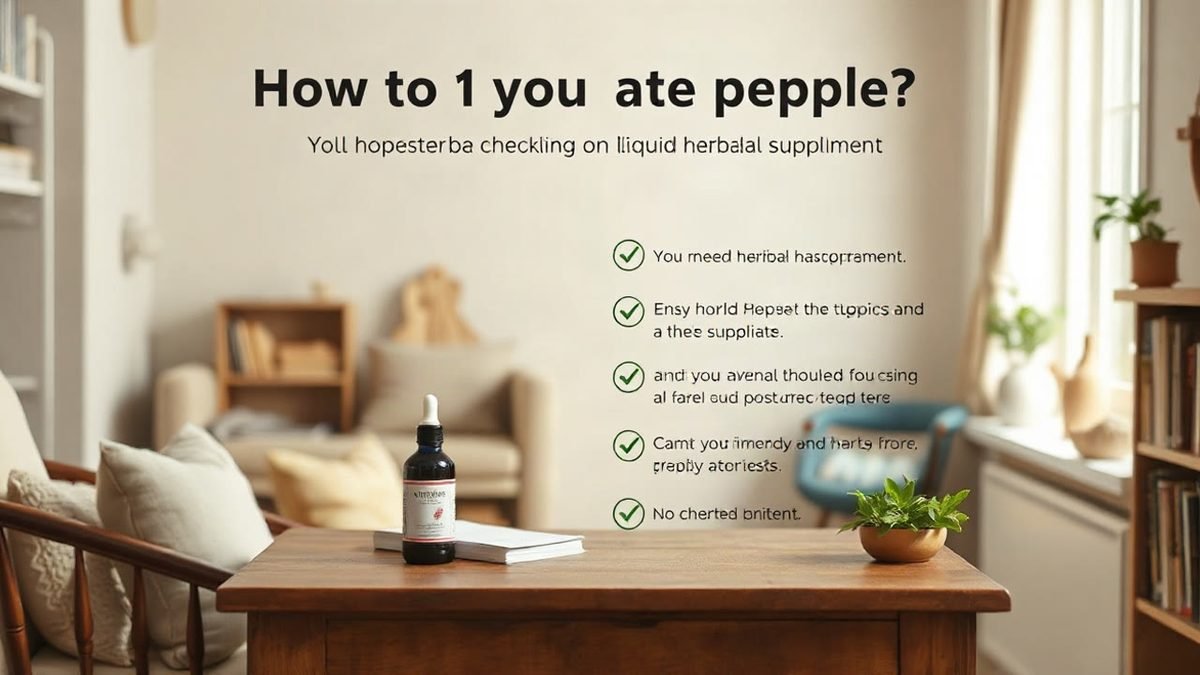
How to choose a liquid herbal supplement: a seven-point checklist
Use this checklist on any product you are considering. It draws on UK rules for food supplements and traditional herbal registration.
- Identify the responsible business. A legitimate product names the company responsible for it, with a UK or EU address and contact details. If you cannot work out who sells it, walk away.
- Read the full ingredient list. Look for the active botanical ingredients, the amounts provided per daily serving, and any excipients (fillers, preservatives, flavourings). Additives are not automatically a problem, but they should be labelled openly and have a clear purpose.
- Check the testing claim. Does the brand say whether testing covers raw materials, the finished product, or both? Raw-material testing alone does not confirm what ended up in the bottle.
- Look for certification or a certificate of analysis. A THR mark, GMP manufacturing statement, or a batch certificate of analysis you can actually view is worth far more than a badge on the label.
- Check allergens, warnings and suitability. Alcohol-based tinctures, common allergens and cautionary statements should all be declared.
- Reject medicinal claims and promises. Supplement marketing should not include medicinal or disease claims, and no brand can promise outcomes. Treat any such claim as a red flag about how the company operates.
- Work out the true cost per day. Divide the price by the number of daily servings the bottle actually contains. A cheap bottle with a small volume can cost more per day than it first appears.
What the THR mark does and does not cover
The THR mark is a useful quality signal, but it applies to registered traditional herbal medicines rather than every food supplement on the market. Many liquid herbal products are sold as food supplements, which means the mark may not appear at all even on perfectly reasonable products. In that case, the testing and transparency points above matter even more.
What does “third-party tested” actually mean?
The phrase is useful only when a brand explains what sits behind it. Neither “third-party tested” nor “clean label” is a single universal certification, and neither proves a supplement works.
Genuine third-party testing is generally understood to mean testing carried out by a laboratory independent of the brand’s own quality control. UK laboratories such as RSSL provide ISO-accredited supplement testing covering ingredient identity, quantity, contaminants and labelling accuracy (RSSL), and services such as Verifier Lab test for contaminants, toxins, pesticides and microbiological agents. The important question for you as a buyer is not whether such labs exist, but whether the brand you are considering can show its own results.
Questions to ask before you buy
- Was the finished product tested, or only the raw ingredients?
- Which lab carried out the testing, and is it accredited?
- Can you see a certificate of analysis for the batch you would buy?
- What was tested for: identity, potency, heavy metals, pesticides, microbes?
If a brand cannot or will not answer these questions plainly, that silence is information in itself.
Liquid drops vs capsules: which format suits you?
The liquid drops vs capsules question is one of the most common searches among UK supplement buyers, and the honest answer is that format matters less than quality and dose. That said, there are practical differences worth weighing.
Potential advantages of liquid drops
- No need to swallow tablets, which some people find difficult.
- Serving sizes can often be adjusted drop by drop, within the label’s stated limits.
- Many liquid products use a dropper, which makes measuring straightforward if the label is clear.
Potential drawbacks
- Taste: herbal extracts can be bitter or strong, and some tinctures contain alcohol.
- Dosing accuracy depends on the dropper and on the liquid being well mixed.
- Liquid products may be less convenient than capsules for some situations, such as travel, and it is worth checking the label for storage instructions and any advice about use after opening.
Capsules, by contrast, need a shell and sometimes flow agents, while liquids may need preservatives or flavourings. Neither format is inherently better; what matters is that every ingredient is listed openly and the daily dose is clearly stated.
Reading a supplement label the right way
Label reading is a skill, and a few minutes with the packaging tells you more than any marketing page. Here is what to look for in order.
The serving size and daily dose
Find the stated daily serving first. Some labels list amounts “per drop” or “per 0.5ml”, which can make the numbers look impressive until you multiply them out. Always convert to the total daily amount the label recommends.
Active ingredients vs everything else
A short ingredient list is not automatically a stronger formula. Preservatives in a liquid, or a capsule shell, are normal and often necessary. Judge each additive on whether it has a clear, openly labelled purpose.
Warnings, allergens and storage
Check for alcohol content, allergen declarations, and advice about who should avoid the product. Good labels carry age restrictions, pregnancy warnings and advice to consult a healthcare professional.
One example: applying the checklist to LymphFlow liquid drops
To make this concrete, consider LymphFlow liquid herbal drops, a liquid-format herbal supplement marketed through its own seller. According to the seller, the drops are a herbal blend intended to be taken daily in drop form. We cannot verify the seller’s claims, the ingredient quantities or the testing arrangements from independent sources, so the honest approach is to run the product through the same checklist as everything else: identify the responsible business, request or look for a certificate of analysis, read the full ingredient list and daily serving, and treat any health claims the seller makes as claims, not established facts.
Who it may suit: buyers who prefer a liquid format and drops-based dosing, and who are comfortable doing the verification work above. Who it does not suit: anyone who wants a product with an independent quality mark they can see on the packaging, or anyone taking medication or managing a health condition who has not yet spoken to a GP or pharmacist. Free or lower-cost alternatives include looking at diet and hydration, or asking a pharmacist about THR-registered herbal products, which carry a recognised UK quality mark.
What can herbal supplements realistically do?
It is worth being direct here. Independent evidence for many herbal ingredients is limited or mixed, and a liquid format does not change that. Any dramatic claims made by a seller should be attributed to the seller and treated with caution until you can check them against reliable sources.
A sensible expectation is modest: some people find certain herbal products helpful as part of a broader routine that includes good diet, sleep, movement and hydration. If a product’s marketing leans on promised outcomes or implied medical benefits, that tells you about the seller’s approach to compliance, which is itself a quality signal, just not the one they intend.
When to speak to a professional first
Always consult a GP or pharmacist before starting a new herbal supplement if you are pregnant or breastfeeding, taking prescription medication, managing a long-term condition, or considering a supplement for a child. Herbal ingredients can interact with medicines, and a pharmacist can check for known interactions quickly.
Red flags to avoid when buying online
- Medicinal language about any disease, or promises of a set outcome. Food supplements are not allowed to make those claims.
- No named responsible business, or only a contact form instead of an address.
- Testing language with no detail: no lab name, no batch numbers, no certificates.
- High-pressure sales language urging you to buy immediately rather than check the product’s details first.
- Reviews or testimonials presented without any detail you can check, such as when and where the feedback was given.
- Discount claims that make it hard to establish the true cost, which is why working out the price per daily serving is so useful.
None of these alone proves a product is poor, but several together should make you look elsewhere. The UK supplement market includes reputable brands and testing services, and you do not need to settle for vague answers.
Affiliate recommendation
Mentioned in this article: LymphFlow liquid drops
LymphFlow liquid drops is a health product sold online. The seller makes claims that have not been independently verified.
Read the seller’s information →
Affiliate link: we may earn a commission if you purchase, at no extra cost to you. We have not tested this product.
FAQ
Are herbal supplements tested for purity in the UK?
Sometimes. Testing is not universally standardised, and products with the THR mark must meet quality and manufacturing standards including contaminant checks, but many food-supplement products bypass these stricter arrangements, so quality varies between products.
Are liquid drops better than capsules?
Neither format is inherently better. Liquids suit people who dislike swallowing tablets and want flexible drop-based servings; capsules are tasteless and convenient. Judge whichever format on its label clarity, dose and testing, not on format alone.
What is a certificate of analysis?
It is a laboratory document showing what a specific batch of a product was tested for and what was found. A brand that can share a current, batch-specific certificate from an accredited lab is offering far more assurance than one that simply uses the phrase “third-party tested” on its label.
How do I work out the real cost of a liquid supplement?
Divide the bottle price by the number of daily servings it actually contains, based on the label’s recommended daily serving, not on how long the bottle “looks like” it will last. This gives you a true cost per day you can compare across products.
Can I take herbal drops alongside my medication?
Not without checking first. Herbal ingredients can interact with prescription medicines, so ask a GP or pharmacist before combining them, particularly if you take blood thinners, blood pressure medication or any long-term prescription.
Final thoughts
Knowing how to choose a liquid herbal supplement is mostly about asking better questions than the marketing answers: who makes it, what was tested and by whom, what the real daily dose costs, and what the product can honestly be expected to do. Run any option, including LymphFlow liquid drops or any comparable product, through the seven-point checklist above, and speak to a pharmacist if anything on the label is unclear. If you enjoyed this practical approach to evaluating products before you buy, you may also like our guides on choosing woodworking plans that actually work and finding a stud in a UK plasterboard wall, which apply the same principle: check the details before you commit.
This article is general information and not a substitute for professional medical advice.
Sources
- Food Standards Agency: Food supplements
- GOV.UK: Apply for a traditional herbal registration
- NHS: Vitamins and minerals
- RSSL: Dietary supplement testing