
10 Powerful Breathing Exercises to Combat Sleep Apnea at Home Tonight
If you’re one of the millions of people struggling with sleep apnea, you know how exhausting it can be to wake up feeling like you haven’t slept at all. The constant interruptions to your breathing during sleep don’t just leave you tired—they can seriously impact your health and quality of life. While medical treatment is essential for severe cases, there are powerful breathing exercises you can start practicing tonight that may help reduce your symptoms and improve your sleep quality.
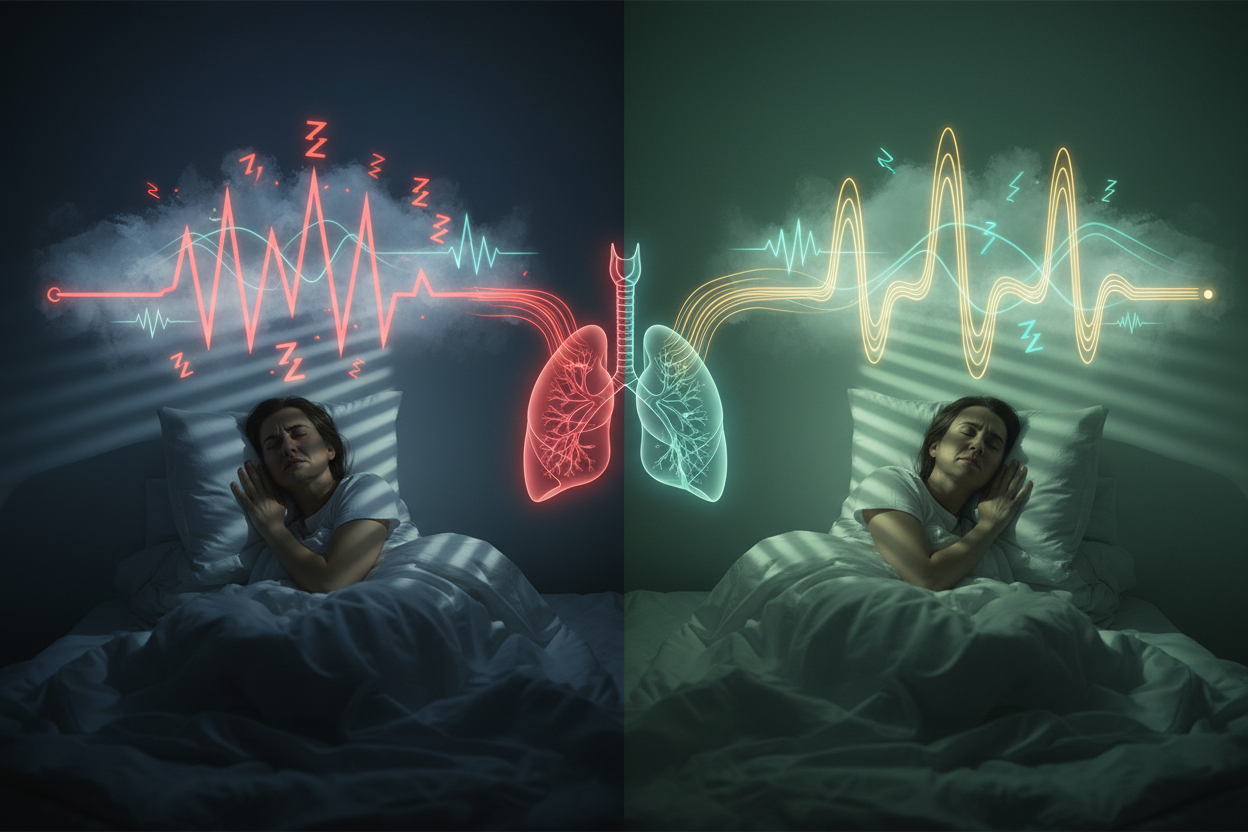
Sleep apnea occurs when your breathing repeatedly stops and starts during sleep, often due to relaxed throat muscles blocking your airway. This condition affects approximately 22 million Americans, with many cases going undiagnosed. The good news is that targeted breathing exercises can strengthen the muscles involved in breathing and help keep your airways open during sleep.
Before we dive into these exercises, it’s important to note that while breathing techniques can be incredibly beneficial, they should complement—not replace—professional medical treatment. Always consult with your healthcare provider about your sleep apnea symptoms and treatment options.
Understanding How Breathing Exercises Help Sleep Apnea
Breathing exercises work by strengthening the muscles in your throat, tongue, and soft palate—the same muscles that can collapse and block your airway during sleep apnea episodes. Think of it like going to the gym for your respiratory system. Just as regular exercise strengthens your body, consistent breathing practice can tone the muscles responsible for keeping your airways open.
Research has shown that oropharyngeal exercises, which include specific breathing techniques, can reduce sleep apnea severity by up to 39% in some patients. These exercises also improve oxygen saturation levels and can decrease the frequency of breathing interruptions during sleep.
Diaphragmatic Breathing: Your Foundation Exercise
Diaphragmatic breathing, also known as belly breathing, is the cornerstone of respiratory health. This technique teaches you to breathe deeply using your diaphragm rather than shallow chest breathing, which many of us default to during stress or poor posture.
To practice diaphragmatic breathing, lie on your back with one hand on your chest and another on your belly. Breathe in slowly through your nose, allowing your belly to rise while keeping your chest relatively still. Exhale slowly through pursed lips, feeling your belly fall. Start with 5-10 minutes before bed, gradually increasing the duration as you become more comfortable with the technique.
This exercise not only strengthens your diaphragm but also promotes relaxation, making it easier to fall asleep naturally. Many people find that practicing diaphragmatic breathing becomes a calming bedtime ritual that signals to their body it’s time to wind down.
The 4-7-8 Breathing Technique for Better Sleep
The 4-7-8 breathing technique, popularized by Dr. Andrew Weil, is particularly effective for people with sleep apnea because it promotes deep, controlled breathing while activating the body’s relaxation response. This technique can help regulate your breathing pattern and prepare your respiratory system for more stable sleep.
Here’s how to do it: Exhale completely through your mouth, making a whoosh sound. Close your mouth and inhale quietly through your nose for 4 counts. Hold your breath for 7 counts. Exhale completely through your mouth for 8 counts, making that whoosh sound again. Repeat this cycle 3-4 times initially, working up to 8 cycles as you become more experienced.
The extended exhale in this technique helps activate your parasympathetic nervous system, which is responsible for rest and relaxation. This can be particularly beneficial if anxiety about sleep apnea is keeping you awake or making your symptoms worse.
Tongue and Throat Strengthening Exercises
Your tongue is a powerful muscle, and when it’s weak or poorly positioned, it can contribute to airway obstruction during sleep. Tongue exercises specifically target this muscle to improve its tone and positioning.
One effective exercise involves pressing your tongue firmly against the roof of your mouth and sliding it backward. Hold this position for 3 seconds, then relax. Repeat 10-15 times. Another helpful technique is to stick your tongue out as far as possible, hold for 3 seconds, then try to touch your chin with your tongue tip, hold again, then try to touch your nose. This sequence helps strengthen different tongue muscles.
You can also practice saying vowel sounds (A, E, I, O, U) in an exaggerated manner, really emphasizing the mouth and throat movements. This might feel silly at first, but these exercises work the same muscles that need to stay toned to keep your airway open during sleep.
Pursed Lip Breathing for Airway Control
Pursed lip breathing is a simple yet effective technique that helps you control the pace of your breathing and keeps your airways open longer. This exercise is particularly beneficial for people with sleep apnea because it teaches you to exhale slowly and completely, which can improve the efficiency of your breathing.
To practice pursed lip breathing, inhale slowly through your nose for 2 counts, keeping your mouth closed. Purse your lips as if you’re about to whistle or blow out a candle. Exhale slowly through your pursed lips for 4 counts, making the exhale twice as long as the inhale. The key is to make your exhale slow and controlled, not forced.
This technique helps prevent the rapid, shallow breathing that can sometimes trigger or worsen sleep apnea episodes. It also helps remove trapped air from your lungs and can reduce the work of breathing overall.
Alternate Nostril Breathing for Balance
Alternate nostril breathing, or Nadi Shodhana in yoga tradition, is a powerful technique that balances your nervous system and can improve overall respiratory function. While it might seem unusual at first, this practice has been used for thousands of years to promote better breathing and relaxation.
Using your right thumb, close your right nostril and inhale slowly through your left nostril for 4 counts. Close your left nostril with your ring finger, release your thumb, and exhale through your right nostril for 4 counts. Inhale through your right nostril, then close it and exhale through your left nostril. This completes one round. Practice 5-10 rounds before bed.
This exercise helps ensure both sides of your nasal passages are clear and functioning well, which is crucial for people with sleep apnea who may already have compromised breathing during sleep. It also activates the parasympathetic nervous system, promoting relaxation and better sleep quality.
The Humming Bee Breath (Bhramari)
The humming bee breath is a unique technique that creates vibrations in your head and throat, which can help strengthen the muscles around your airway. The vibrations from humming also have a naturally calming effect on the nervous system.
Sit comfortably with your spine straight. Place your thumbs in your ears and your index fingers above your eyebrows. Rest your remaining fingers over your closed eyes. Take a deep breath in, and as you exhale, make a humming sound like a bee. The humming should be smooth and steady. Focus on the vibrations you feel in your head and throat.
Practice this for 5-10 breaths initially. The vibrations help tone the muscles in your throat and can improve their ability to maintain proper positioning during sleep. Many people also find the humming sound deeply relaxing, making it an excellent addition to a bedtime routine.
Box Breathing for Respiratory Control
Box breathing, also known as square breathing, is a technique used by Navy SEALs and other high-performance individuals to maintain calm and focus under pressure. For people with sleep apnea, it’s valuable because it teaches precise control over breathing rhythm and depth.
Visualize a square and breathe along its sides: Inhale for 4 counts (going up one side), hold for 4 counts (across the top), exhale for 4 counts (down the other side), and hold empty for 4 counts (across the bottom). Repeat this pattern 4-8 times, maintaining the same count for each phase.
This exercise strengthens your respiratory muscles and improves your ability to control breathing patterns. The equal timing of each phase helps regulate your autonomic nervous system and can lead to more stable breathing during sleep.
Progressive Muscle Relaxation with Breath Focus
Progressive muscle relaxation combined with focused breathing addresses both the physical tension that can worsen sleep apnea and the breathing patterns that support better sleep. This technique is particularly helpful if stress or anxiety is contributing to your sleep issues.
Start by lying comfortably and taking several deep breaths. Beginning with your toes, tense each muscle group for 5 seconds while inhaling, then relax completely while exhaling slowly. Work your way up through your legs, abdomen, arms, shoulders, and face. Pay special attention to your jaw, tongue, and throat muscles, as tension here can contribute to airway obstruction.
As you release tension from each muscle group, focus on your breath becoming deeper and more natural. This combination helps prepare your entire body for sleep while specifically addressing the muscle groups most relevant to sleep apnea.
The Three-Part Breath (Dirga Pranayama)
The three-part breath is a foundational yoga breathing technique that teaches you to use your entire lung capacity effectively. This is particularly beneficial for people with sleep apnea because it promotes full, deep breaths and strengthens all the muscles involved in respiration.
Place one hand on your chest and one on your belly. Breathe into your belly first, feeling it expand. Continue breathing to fill your ribcage, feeling it widen. Finally, breathe into your upper chest, feeling a gentle rise. Exhale in reverse order: chest, ribs, belly. Each part should flow smoothly into the next, creating one continuous breath.
This exercise teaches you to breathe more completely and efficiently, which can improve oxygen levels and reduce the likelihood of breathing interruptions during sleep. It also helps you become more aware of your breathing patterns, which is valuable for managing sleep apnea.
Breath Retention Exercises for Respiratory Strength
Gentle breath retention exercises can help strengthen your respiratory muscles and improve your body’s tolerance to varying oxygen levels. However, these should be practiced carefully and never to the point of discomfort, especially if you have sleep apnea.
Start with a comfortable inhale, then hold your breath for just 2-3 seconds before exhaling slowly. Gradually increase the retention time as you become more comfortable, but never hold your breath to the point of strain or discomfort. You can also practice holding after the exhale for a few seconds before taking your next breath.
These exercises help train your respiratory system to function more efficiently and can improve your body’s response to the brief oxygen changes that occur with sleep apnea. Always practice these gently and stop if you feel any discomfort.
Creating Your Nightly Breathing Routine
The key to seeing benefits from these breathing exercises is consistency. Rather than trying to do all ten exercises every night, choose 3-4 that feel most comfortable and effective for you. Start with just 5-10 minutes of practice each evening, gradually increasing as the exercises become more natural.
Consider creating a sequence that flows well for you. Many people find success starting with diaphragmatic breathing to establish a foundation, moving through 2-3 specific exercises, and ending with a relaxation technique like the 4-7-8 breath or progressive muscle relaxation.
Keep a simple log of your practice and any changes you notice in your sleep quality, energy levels, or sleep apnea symptoms. This can help you identify which exercises are most beneficial for your specific situation and provide valuable information to share with your healthcare provider.
When to Seek Professional Help
While these breathing exercises can be incredibly beneficial, it’s crucial to understand when professional medical intervention is necessary. If you’re experiencing severe sleep apnea symptoms, such as loud snoring, gasping during sleep, severe daytime fatigue, or morning headaches, you should consult with a sleep specialist.
Sleep apnea can lead to serious health complications including high blood pressure, heart disease, stroke, and diabetes if left untreated. Breathing exercises should be viewed as a complementary therapy that can enhance your overall treatment plan, not replace medical interventions like CPAP therapy or oral appliances when they’re needed.
Your healthcare provider can help determine the severity of your sleep apnea and recommend the most appropriate treatment approach. Many doctors are supportive of breathing exercises as part of a comprehensive treatment plan, especially for mild to moderate cases.
Conclusion
These ten powerful breathing exercises offer a natural, accessible way to start addressing your sleep apnea symptoms tonight. By strengthening the muscles involved in breathing, improving your respiratory control, and promoting relaxation, these techniques can become valuable tools in your journey toward better sleep.
Remember that consistency is key—just like any form of exercise, the benefits of breathing techniques build over time with regular practice. Start small, be patient with yourself, and celebrate the small improvements you notice along the way. Better sleep and improved health are worth the investment in these simple yet powerful practices.
Sweet dreams, and here’s to breathing easier tonight and every night ahead.
Take Control of Your Nighttime Breathing
Don’t let sleep apnea silently accelerate your lung disease. Discover the natural breathing protocol that thousands of respiratory patients are using to restore healthy sleep patterns and protect their lung function.
