

Tongue Exercises That Transform Sleep Apnea: Myofunctional Therapy Guide
If you’ve been struggling with sleep apnea and looking for alternatives to CPAP machines or surgical interventions, you might be surprised to learn that your tongue could hold the key to better sleep. Myofunctional therapy, a specialized approach that focuses on strengthening the muscles of your mouth and throat, has emerged as a promising treatment for obstructive sleep apnea. This comprehensive guide will walk you through evidence-based tongue exercises that can significantly improve your sleep quality and overall health.
Sleep apnea affects millions of people worldwide, causing repeated interruptions in breathing during sleep. While traditional treatments like continuous positive airway pressure (CPAP) therapy remain effective, many patients seek more natural, comfortable alternatives. That’s where myofunctional therapy comes in – a non-invasive approach that targets the root cause of many sleep apnea cases: weak or improperly functioning oral and throat muscles.
Understanding the Connection Between Tongue Position and Sleep Apnea
Your tongue is much more than just a tool for tasting food and speaking. It’s a powerful muscle that plays a crucial role in maintaining an open airway during sleep. When your tongue lacks proper tone or rests in the wrong position, it can collapse backward during sleep, partially or completely blocking your airway.
The relationship between tongue posture and sleep apnea is fascinating. During normal breathing, your tongue should rest against the roof of your mouth, creating optimal space for airflow. However, many people develop poor tongue posture habits over time, often due to factors like mouth breathing, prolonged thumb sucking in childhood, or structural issues.
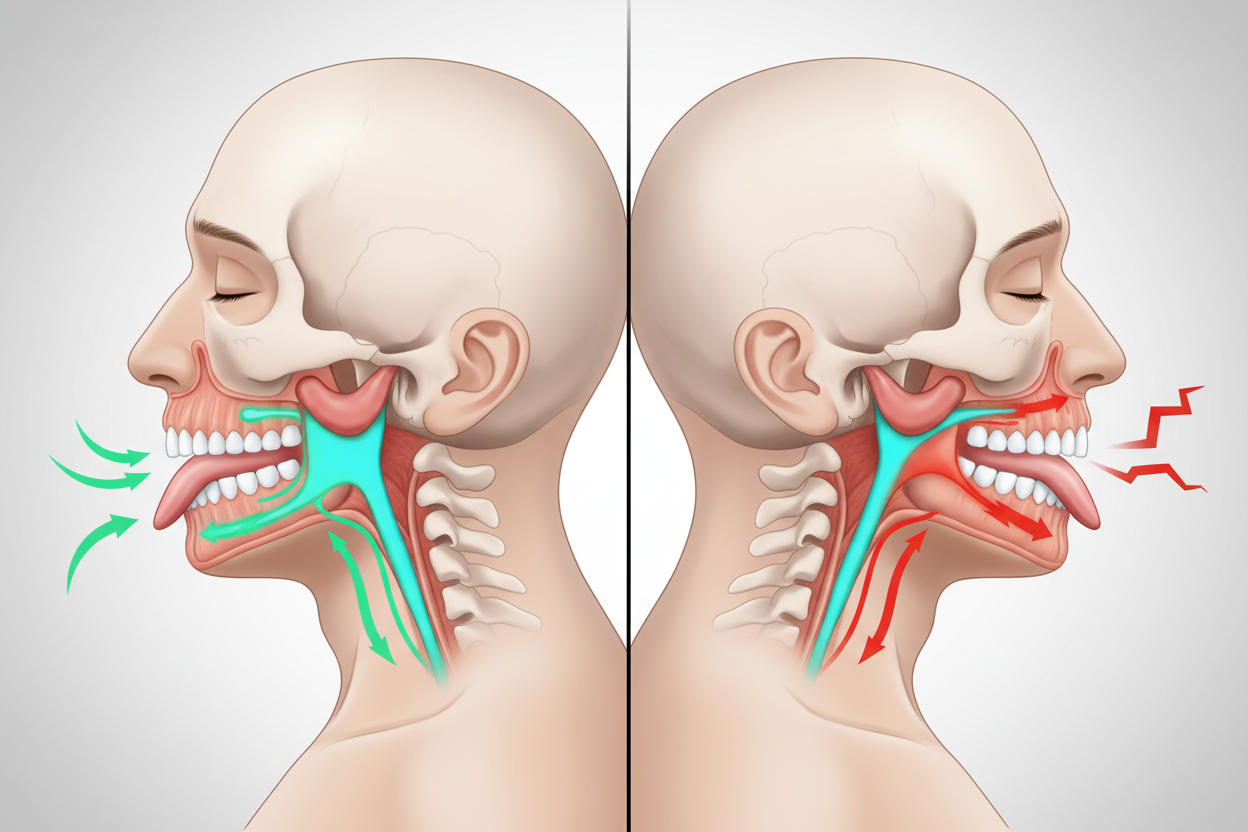
Research published in the International Journal of Otolaryngology has shown that myofunctional therapy can reduce sleep apnea symptoms by up to 50% in some patients. The exercises work by strengthening the muscles that keep your airway open, improving tongue posture, and enhancing overall oral function.
The Science Behind Myofunctional Therapy for Sleep Apnea
Myofunctional therapy operates on the principle that many sleep apnea cases stem from muscle dysfunction rather than purely structural problems. When the muscles of your tongue, soft palate, and throat are weak or uncoordinated, they’re more likely to collapse during sleep, creating airway obstructions.
Clinical studies have demonstrated remarkable results. A landmark study published in Sleep Medicine found that patients who completed a three-month myofunctional therapy program experienced significant improvements in their Apnea-Hypopnea Index (AHI), the primary measure used to diagnose sleep apnea severity. Participants also reported better sleep quality, reduced daytime sleepiness, and improved quality of life.
The therapy works by targeting specific muscle groups through repetitive exercises that improve strength, coordination, and endurance. Think of it as physical therapy for your mouth and throat – just as you might strengthen your core muscles to improve back pain, you can strengthen your oral muscles to improve breathing during sleep.
Essential Tongue Exercises for Sleep Apnea Relief
Now let’s dive into the specific exercises that can transform your sleep apnea symptoms. These exercises should be performed consistently, ideally twice daily, for optimal results. Remember, like any muscle training program, consistency is key to seeing improvements.
The Tongue Slide Exercise
This fundamental exercise helps improve tongue strength and positioning. Start by placing the tip of your tongue against the back of your upper front teeth. Slowly slide your tongue backward along the roof of your mouth as far as it will comfortably go. Hold this position for three seconds, then return to the starting position. Repeat this movement 10-15 times per session.
The tongue slide exercise is particularly effective because it trains your tongue to maintain contact with the roof of your mouth, which is the ideal resting position for optimal airway space. Many people notice improved nasal breathing after just a few weeks of consistent practice.
Tongue Push-Ups for Muscle Strengthening
Just like traditional push-ups strengthen your arms and chest, tongue push-ups build the strength of your tongue muscle. Place your tongue flat against the roof of your mouth and apply gentle pressure upward. Hold for 10 seconds, then relax. Start with 5-10 repetitions and gradually increase as your tongue strength improves.
This exercise is excellent for people whose tongues tend to fall backward during sleep. By building tongue strength, you’re creating a natural defense against airway collapse. Some patients report feeling their tongue “staying put” better during sleep after incorporating this exercise into their routine.
The Tongue Stretch and Hold Technique
Flexibility is just as important as strength when it comes to optimal tongue function. For this exercise, stick your tongue out as far as possible and try to touch your chin. Hold this position for 10-15 seconds, then try to touch your nose with your tongue tip. Finally, stretch your tongue to each corner of your mouth, holding each position briefly.
This comprehensive stretching routine improves tongue mobility and helps ensure that your tongue can move freely and position itself correctly during sleep. Many people are surprised to discover how limited their tongue mobility has become over time.
Advanced Myofunctional Exercises for Better Results
Once you’ve mastered the basic tongue exercises, you can progress to more advanced techniques that target additional muscle groups involved in maintaining airway patency.
Soft Palate and Throat Strengthening
Your soft palate – the soft tissue at the back of your mouth – plays a crucial role in preventing airway collapse. To strengthen this area, practice saying “ahh” while keeping your mouth wide open for 20 seconds. You should feel the muscles at the back of your throat engaging. Repeat this exercise 5-10 times per session.
Another effective soft palate exercise involves humming with your mouth closed, then opening your mouth while continuing to hum. This creates vibration in the soft palate area, helping to tone these important muscles.
Breathing Coordination Exercises
Proper breathing patterns work hand-in-hand with good tongue posture. Practice breathing slowly through your nose while maintaining tongue contact with the roof of your mouth. This exercise helps establish the correct resting posture for both breathing and tongue position.
Try the “4-7-8” breathing technique: inhale through your nose for 4 counts, hold your breath for 7 counts, then exhale through your mouth for 8 counts. Maintain proper tongue posture throughout this exercise to reinforce good habits.
Creating an Effective Exercise Routine
Success with myofunctional therapy depends largely on consistency and proper technique. Most sleep specialists recommend performing these exercises twice daily – once in the morning and once before bedtime. Each session should last about 10-15 minutes initially, gradually increasing as your endurance improves.
Keep a simple log of your exercises to track your progress. Note any improvements in sleep quality, reduced snoring, or decreased daytime fatigue. Many people begin noticing subtle changes within 2-4 weeks, with more significant improvements typically occurring after 2-3 months of consistent practice.
It’s important to be patient with yourself during this process. Unlike taking a pill or using a device, myofunctional therapy requires retraining muscle memory that may have been established over decades. The good news is that once you develop proper muscle function and posture, the benefits tend to be long-lasting.
Combining Myofunctional Therapy with Other Treatments
While myofunctional therapy can be highly effective on its own, it often works best as part of a comprehensive approach to sleep apnea treatment. Many patients successfully combine these exercises with other interventions like weight management, positional therapy, or even reduced CPAP pressure settings.
If you’re currently using a CPAP machine, don’t stop your treatment without consulting your sleep physician. Instead, view myofunctional therapy as a complementary approach that may eventually allow you to reduce your dependence on other treatments or improve their effectiveness.
Some patients find that combining tongue exercises with oral appliances or positional therapy devices creates synergistic effects, leading to better outcomes than any single treatment alone.
When to Seek Professional Guidance
While many of these exercises can be performed safely at home, working with a trained myofunctional therapist can significantly improve your results. These specialized professionals can assess your specific muscle function patterns, identify areas that need the most attention, and customize an exercise program for your unique needs.
Consider seeking professional help if you have severe sleep apnea, structural abnormalities, or if you’re not seeing improvements after 6-8 weeks of consistent self-directed exercise. A myofunctional therapist can also help ensure you’re performing exercises correctly and progressing at an appropriate pace.
Measuring Your Progress and Long-term Success
Tracking your improvement is crucial for maintaining motivation and adjusting your exercise routine as needed. Keep a sleep diary noting factors like sleep quality, snoring intensity, morning headaches, and daytime energy levels. Many smartphone apps can help monitor snoring patterns, providing objective feedback on your progress.
Consider asking your sleep physician about follow-up sleep studies after 3-6 months of consistent myofunctional therapy. These objective measurements can provide concrete evidence of improvement and help guide future treatment decisions.
Remember that myofunctional therapy is often a long-term commitment. Even after achieving significant improvements, continuing with a maintenance routine of exercises can help preserve your gains and prevent regression of symptoms.
Tongue exercises and myofunctional therapy represent a promising, natural approach to managing sleep apnea that addresses the root cause of many cases – poor muscle function and coordination. While results vary among individuals, the scientific evidence supporting this approach continues to grow, offering hope for those seeking alternatives to traditional sleep apnea treatments.
By incorporating these exercises into your daily routine and maintaining consistency over time, you may find yourself sleeping better, snoring less, and feeling more energized during the day. The journey to better sleep through myofunctional therapy requires patience and dedication, but for many people, the transformation in sleep quality and overall health makes the effort worthwhile. Always consult with your healthcare provider before beginning any new treatment approach, and consider working with a qualified myofunctional therapist to maximize your chances of success.
Take Control of Your Nighttime Breathing
Don’t let sleep apnea silently accelerate your lung disease. Discover the natural breathing protocol that thousands of respiratory patients are using to restore healthy sleep patterns and protect their lung function.
