

Flex Your Airways: Upper Airway Strengthening Workout Plan
Have you ever considered that your breathing passages might need a workout just like your biceps or abs? While most of us focus on strengthening our visible muscles, the hidden powerhouses of our respiratory system often get overlooked. Your upper airways – including your throat, tongue, and the muscles around your nasal passages – play a crucial role in how well you breathe, sleep, and even speak throughout the day.
Think about it: these muscles work around the clock, yet we rarely give them the attention they deserve. Poor upper airway muscle tone can lead to snoring, sleep apnea, difficulty swallowing, and even reduced athletic performance. The good news? Just like any other muscle group, you can strengthen and tone your upper airways with targeted exercises that take just minutes each day.
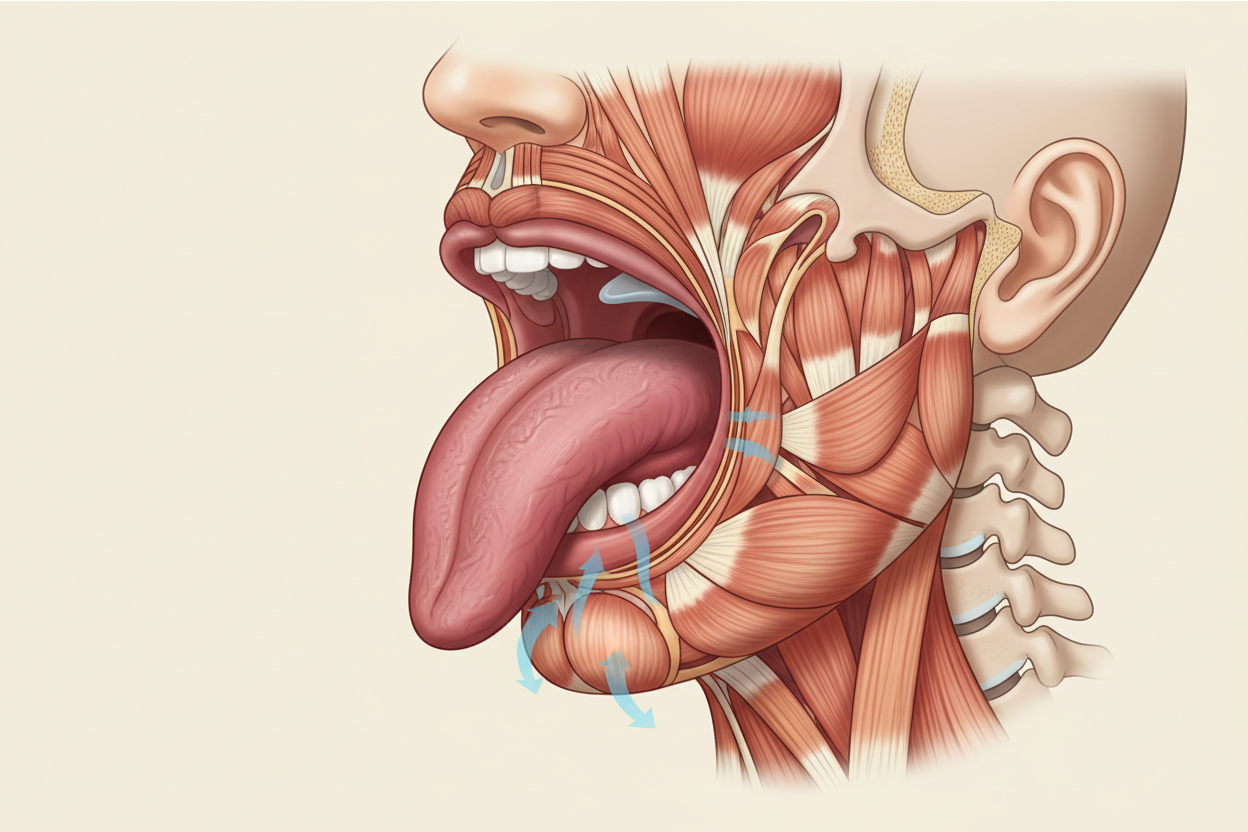
This comprehensive upper airway strengthening workout plan will transform how you think about respiratory fitness. Whether you’re dealing with sleep issues, looking to improve your speaking voice, or simply want to optimize your breathing for better overall health, these exercises will help you build stronger, more resilient airways from the inside out.
Understanding Your Upper Airway Anatomy
Before diving into the exercises, let’s get familiar with the star players in your upper respiratory system. Your upper airway extends from your nose and mouth down to your vocal cords, encompassing several key muscle groups that work together to keep air flowing smoothly.
The soft palate, located at the back of your mouth’s roof, acts like a flexible gate that can open and close. Your tongue – surprisingly one of the strongest muscles in your body – doesn’t just help with eating and speaking; it also plays a vital role in maintaining airway patency during sleep. The muscles around your throat, including the pharyngeal muscles, create the structural support needed for clear breathing passages.
When these muscles become weak or lose their tone, they can collapse inward during sleep or periods of relaxation, creating the vibrations we know as snoring or, in more severe cases, completely blocking airflow. This is where targeted strengthening comes into play, helping you maintain better muscle control and airway stability throughout the day and night.
The Science Behind Airway Muscle Training
Research has shown that upper airway muscle training can significantly improve respiratory function and reduce sleep-disordered breathing. A study published in the American Journal of Respiratory and Critical Care Medicine found that participants who performed targeted throat exercises experienced a 39% reduction in snoring intensity and improved sleep quality within just three months.
The principle behind airway strengthening is similar to any resistance training program. When you consistently challenge these muscles with specific movements and resistance, they adapt by becoming stronger and more coordinated. This improved muscle tone helps maintain better airway patency, reduces tissue vibration, and enhances overall respiratory efficiency.
What makes airway exercises particularly effective is their ability to target both strength and coordination. Unlike passive treatments, active muscle training teaches your airways to respond better to the natural changes in breathing patterns that occur throughout sleep cycles and daily activities.
Essential Tongue Strengthening Exercises
Your tongue is the heavyweight champion of upper airway muscles, and strengthening it can have profound effects on your breathing and sleep quality. These exercises focus on building both strength and positioning awareness.
Start with the tongue press exercise by placing the tip of your tongue against the roof of your mouth, just behind your front teeth. Press firmly and hold for 5 seconds, then relax. Repeat this 10 times, gradually increasing the hold time as your strength improves. This exercise helps train your tongue to maintain proper positioning, which is crucial for keeping your airway open during sleep.
The tongue slide is another powerful exercise that targets different muscle groups. Place your tongue tip against the roof of your mouth and slowly slide it backward as far as comfortable. Hold for 3 seconds, then return to the starting position. Perform 10 repetitions, focusing on smooth, controlled movements. This exercise improves tongue mobility and strengthens the muscles responsible for maintaining airway space.
For advanced practitioners, try the tongue resistance exercise using a spoon or tongue depressor. Place the tool against your tongue and push against it in different directions – forward, backward, and side to side. Hold each position for 5 seconds with 10 repetitions in each direction. This creates resistance training similar to using weights for other muscle groups.
Soft Palate and Throat Muscle Workouts
The soft palate and surrounding throat muscles are often the culprits behind snoring and airway collapse. These exercises specifically target these areas to improve muscle tone and coordination.
Begin with the classic “say ahh” exercise, but with a twist. Open your mouth wide and say “ahh” while lifting your soft palate as high as possible. You should feel the muscles at the back of your throat engage. Hold this position for 5 seconds, then relax. Repeat 10 times, focusing on the lifting sensation in your soft palate.
The swallowing exercise is deceptively simple but highly effective. Swallow your saliva while paying attention to the muscle contractions in your throat. Now, try to hold the swallow position for 3 seconds before releasing. This strengthens the entire swallowing mechanism and improves coordination between different muscle groups.
Yawning exercises might seem silly, but they’re incredibly beneficial for soft palate strengthening. Perform exaggerated yawns, opening your mouth as wide as possible and stretching all the muscles in your throat and jaw. Hold each yawn for 5 seconds, then close your mouth slowly. The stretching and contracting motion helps improve muscle flexibility and strength.
Breathing Pattern Enhancement Techniques
Proper breathing patterns support upper airway muscle function and can significantly improve the effectiveness of your strengthening routine. These techniques focus on optimizing airflow and muscle coordination.
Diaphragmatic breathing forms the foundation of all respiratory exercises. Place one hand on your chest and another on your abdomen. Breathe slowly through your nose, ensuring that your abdominal hand rises more than your chest hand. This technique reduces upper airway stress and promotes more efficient breathing patterns.
The 4-7-8 breathing technique combines breath control with upper airway engagement. Inhale through your nose for 4 counts, hold your breath for 7 counts, then exhale through your mouth for 8 counts. During the hold phase, your upper airway muscles work to maintain stability, providing an isometric strengthening effect.
Resistance breathing using pursed lips creates gentle back-pressure that helps strengthen respiratory muscles. Inhale normally through your nose, then exhale slowly through pursed lips as if you’re blowing out a candle. This technique improves muscle endurance and helps train better breathing control during sleep.
Creating Your Personal Workout Schedule
Consistency trumps intensity when it comes to upper airway strengthening. Unlike traditional workouts that might require rest days, these exercises can be performed daily since they use smaller muscle groups that recover quickly.
Start with a basic routine that takes 10-15 minutes per day. Perform tongue exercises in the morning when your muscles are fresh, soft palate exercises in the afternoon, and breathing techniques before bed to promote better sleep. This distribution helps maintain muscle engagement throughout the day while ending with relaxation-focused exercises.
Week one should focus on learning proper form and establishing the routine. Perform each exercise with lower repetitions and shorter hold times. Week two through four, gradually increase repetitions and hold times by 20-30%. After the first month, you can add resistance or more challenging variations to continue progressing.
Track your progress by noting improvements in sleep quality, reduced snoring (ask a partner to help monitor this), better voice clarity, or easier breathing during physical activities. These functional improvements are often more meaningful than simply counting repetitions.
Troubleshooting Common Challenges
Like any new exercise routine, upper airway strengthening comes with its own set of challenges. Many people initially struggle with muscle fatigue, especially in the tongue and soft palate areas. This is completely normal – these muscles may have been underused for years.
If you experience excessive fatigue, reduce the intensity and duration of exercises rather than skipping them entirely. Building endurance in these small muscles takes time, and pushing too hard too fast can lead to discouragement or even strain.
Some individuals find it difficult to isolate specific muscles, particularly the soft palate. Using a mirror can help you visualize the movements, and practicing in front of one allows you to see when you’re engaging the correct muscle groups. Don’t worry if it feels awkward at first – muscle memory will develop with consistent practice.
Timing can also be challenging. If mornings are rushed, try performing exercises during your commute (obviously, only breathing exercises while driving), during TV commercial breaks, or while waiting for your coffee to brew. The key is finding small pockets of time throughout your day rather than trying to carve out one large block.
Maximizing Results and Long-term Success
To get the most from your upper airway strengthening routine, combine these exercises with complementary lifestyle habits. Staying well-hydrated keeps the tissues in your throat supple and responsive to exercise. Avoiding alcohol before bedtime prevents muscle relaxation that can undo your strengthening efforts.
Consider your sleeping position as part of your overall airway health strategy. Side sleeping naturally helps keep airways open and can enhance the benefits of your strengthening exercises. If you’re a back sleeper, try elevating your head slightly to reduce gravitational effects on your airway muscles.
Diet also plays a role in upper airway health. Foods that cause inflammation can affect the tissues in your throat and nasal passages. Focus on anti-inflammatory foods like leafy greens, berries, and omega-3 rich fish to support your strengthening efforts.
Remember that results from upper airway strengthening are typically gradual but long-lasting. Most people begin noticing improvements in sleep quality and breathing ease within 2-4 weeks, with more significant changes occurring over 2-3 months of consistent practice.
Conclusion
Your upper airways deserve the same attention and care you give to any other important muscle group in your body. This comprehensive workout plan provides you with the tools to strengthen these often-overlooked muscles, leading to better breathing, improved sleep quality, and enhanced overall respiratory health.
The beauty of upper airway strengthening lies in its simplicity and accessibility. No expensive equipment or gym memberships are required – just a few minutes of daily commitment and the willingness to try something new. As you progress through your routine, you’ll likely discover that these exercises become second nature, seamlessly integrating into your daily life.
Start small, stay consistent, and be patient with your progress. Your airways have been working hard for you every day of your life – now it’s time to return the favor by giving them the strength training they need to serve you even better. Sweet dreams and easy breathing await those who commit to flexing their airways with purpose and consistency.
Take Control of Your Nighttime Breathing
Don’t let sleep apnea silently accelerate your lung disease. Discover the natural breathing protocol that thousands of respiratory patients are using to restore healthy sleep patterns and protect their lung function.
