
Affiliate disclosure: This article contains affiliate links. We may earn a commission if you purchase through them, at no extra cost to you.
Airway Athletics: Upper Respiratory Muscle Conditioning Programs
Have you ever wondered why some athletes seem to have endless endurance while others struggle to catch their breath? The secret might lie in something most people never think about training: their respiratory muscles. Just like you wouldn’t expect to run a marathon without training your legs, your breathing muscles need conditioning too. Welcome to the world of airway athletics, where upper respiratory muscle conditioning programs are revolutionizing how we approach athletic performance and overall health.
Think of your respiratory system as the engine of your body. Even the most powerful car won’t perform well with a weak engine, and the same principle applies to human performance. Your diaphragm, intercostal muscles, and accessory breathing muscles work tirelessly every moment of your life, yet they’re often the most overlooked components in fitness routines.

Understanding Your Upper Respiratory Muscles
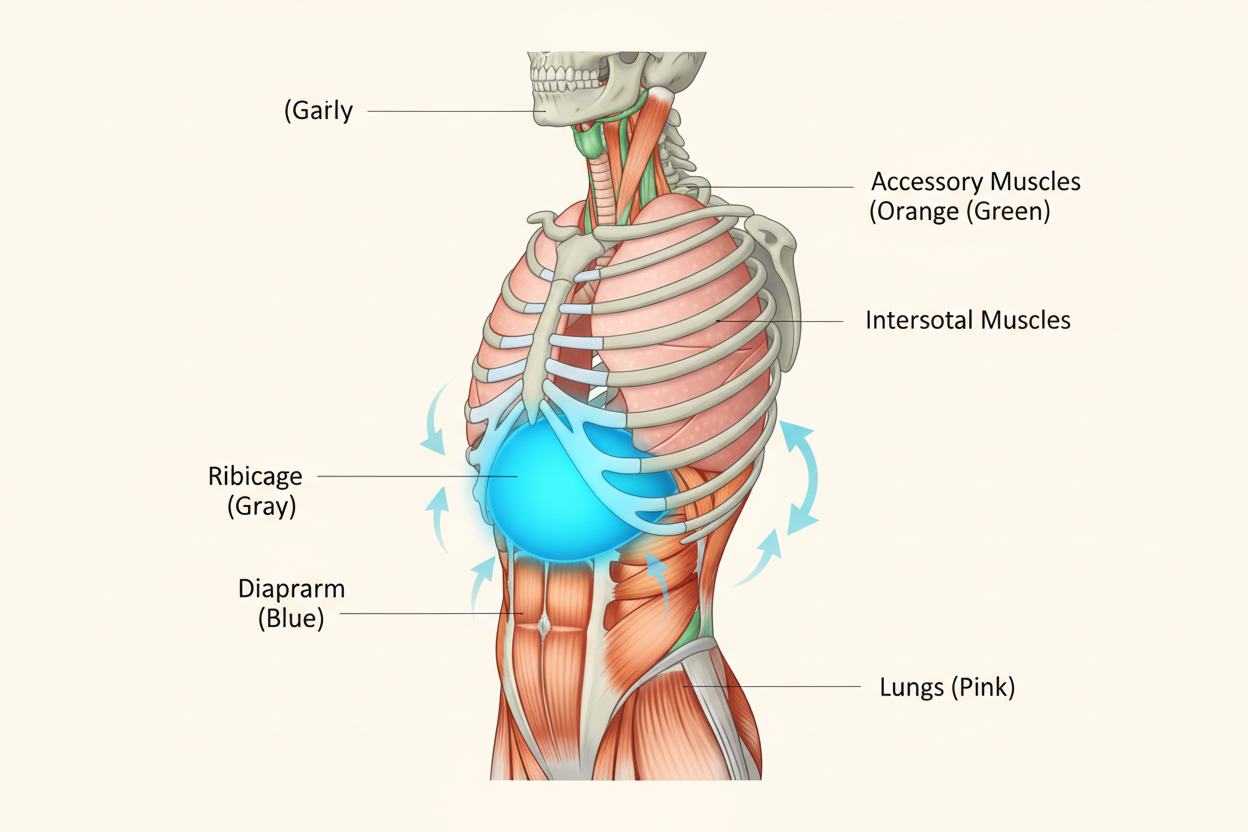
Before diving into conditioning programs, let’s get acquainted with the star players in your respiratory team. Your upper respiratory muscles include the diaphragm, which does about 80% of the breathing work when you’re at rest, the intercostal muscles between your ribs that help expand your chest cavity, and various accessory muscles in your neck and shoulders that kick in during intense activity.
These muscles are unique because they’re both voluntary and involuntary. You can control your breathing consciously, but thankfully, they also work automatically while you sleep. However, like any muscle group, they can become weak, tight, or inefficient without proper training. This is where respiratory muscle conditioning becomes a game-changer.
Research shows that respiratory muscle fatigue can significantly impact athletic performance. When your breathing muscles tire, your body diverts blood flow away from your working muscles to support respiration, leading to earlier fatigue and reduced performance. It’s like trying to drive with the parking brake on.
The Science Behind Respiratory Muscle Training
Respiratory muscle training isn’t just another fitness fad. There’s solid science backing its effectiveness. Studies have demonstrated that targeted respiratory muscle conditioning can improve athletic performance by 15-20% in some cases. The mechanism is fascinating: when you strengthen your breathing muscles, you reduce the oxygen cost of breathing itself, leaving more oxygen available for your working muscles.
One landmark study published in the Journal of Applied Physiology found that cyclists who underwent six weeks of respiratory muscle training improved their time trial performance significantly compared to a control group. The trained group also reported feeling less breathless during intense exercise, suggesting that the training had real, measurable benefits.
The physiological adaptations from respiratory muscle training include increased muscle fiber recruitment, improved neuromuscular coordination, and enhanced muscle endurance. Your breathing becomes more efficient, deeper, and less effortful. It’s like upgrading from a compact car engine to a high-performance V8.
Essential Respiratory Muscle Conditioning Exercises
Now for the practical stuff. Respiratory muscle conditioning doesn’t require expensive gym equipment or complicated routines. Many effective exercises can be done anywhere, anytime. The key is consistency and progressive overload, just like any other strength training program.
Diaphragmatic breathing forms the foundation of respiratory muscle training. Lie on your back with one hand on your chest and another on your belly. Breathe slowly through your nose, ensuring that your belly hand rises while your chest hand remains relatively still. This exercise teaches proper breathing mechanics and strengthens your primary breathing muscle.
Box breathing is another powerful technique used by Navy SEALs and elite athletes. Inhale for four counts, hold for four, exhale for four, and hold empty for four. This pattern challenges your respiratory muscles while promoting mental focus and stress reduction. It’s meditation and muscle training rolled into one.
Inspiratory muscle training using resistance devices has gained popularity among serious athletes. These devices create resistance during inhalation, forcing your breathing muscles to work harder. Start with light resistance and gradually increase as your muscles adapt. Think of it as weight training for your lungs.
Designing Your Personal Conditioning Program
Creating an effective respiratory muscle conditioning program requires the same thoughtful approach as any training regimen. Start by assessing your current respiratory fitness. Can you hold your breath for 30 seconds comfortably? Do you feel breathless climbing stairs? These simple tests give you a baseline to work from.
A well-rounded program should include three components: strength training for your breathing muscles, endurance conditioning, and flexibility work. Strength training involves exercises with resistance or breath holds. Endurance training focuses on sustained breathing patterns at varying intensities. Flexibility work includes stretches for your chest, neck, and back muscles that support respiration.
Frequency matters more than duration when starting out. Aim for 10-15 minutes of respiratory muscle training three to four times per week. Your breathing muscles recover quickly compared to other muscle groups, so you can train them more frequently. However, like any training, listen to your body and avoid overexertion.
Progressive overload applies to respiratory training too. Start with basic exercises and gradually increase difficulty, duration, or resistance. Keep a training log to track your progress. You might be surprised how quickly you notice improvements in both your breathing capacity and overall energy levels.
Integration with Athletic Performance
The real magic happens when you integrate respiratory muscle conditioning with your existing training routine. Elite athletes don’t treat breathing training as separate from their sport-specific training; they weave it throughout their entire program.
Pre-workout breathing routines can serve as both warm-up and mental preparation. Spend five minutes on focused breathing exercises before your main workout. This primes your respiratory system for the work ahead and helps establish the mind-muscle connection that’s crucial for optimal performance.
During training, pay attention to your breathing patterns. Many athletes hold their breath during intense efforts, which actually hurts performance. Practice maintaining controlled breathing even during challenging exercises. This skill transfers directly to competition scenarios.
Post-workout recovery breathing helps your body return to baseline more quickly. Controlled breathing techniques can accelerate heart rate recovery and reduce stress hormones. It’s like having a built-in recovery tool that you can access anytime, anywhere.
Sport-specific applications vary widely. Swimmers might focus on breath-holding capacity and efficient breathing patterns. Runners often benefit from rhythmic breathing techniques that coordinate with their stride. Strength athletes can use breathing strategies to enhance core stability and power output.
Benefits Beyond Athletic Performance
While improved athletic performance might be what draws you to respiratory muscle conditioning, the benefits extend far beyond sports. Better breathing translates to better living in numerous ways that might surprise you.
Stress management becomes more effective when you have strong, well-conditioned breathing muscles. Deep, controlled breathing activates your parasympathetic nervous system, promoting relaxation and reducing cortisol levels. It’s like having a natural stress-relief system built right into your body.
Sleep quality often improves with respiratory muscle training. Stronger breathing muscles can help reduce snoring and sleep apnea symptoms. Better breathing during sleep means better recovery, which impacts everything from mood to cognitive function.
Daily energy levels typically increase as your breathing becomes more efficient. When your body doesn’t have to work as hard to breathe, it has more energy available for other activities. Many people report feeling more alert and less fatigued throughout the day after implementing respiratory muscle training.
Posture improvements are a common side effect of respiratory muscle conditioning. Strong breathing muscles support better spinal alignment and reduce the tendency to slouch. Good posture, in turn, supports even better breathing, creating a positive feedback loop.
Common Mistakes and How to Avoid Them
Like any training method, respiratory muscle conditioning has its pitfalls. The most common mistake is trying to do too much too soon. Your breathing muscles are working 24/7, so they’re already quite conditioned for basic function. However, they need time to adapt to new training demands.
Overbreathing during exercises is another frequent error. The goal isn’t to breathe as fast or as hard as possible. Focus on control, depth, and quality over quantity. Think precision, not speed.
Neglecting proper form in breathing exercises might seem impossible, but it happens more than you’d think. Shallow chest breathing instead of deep diaphragmatic breathing, holding unnecessary tension in your shoulders and neck, or rushing through exercises all reduce effectiveness.
Inconsistency kills progress in respiratory muscle training just like any other fitness endeavor. These muscles respond best to regular, frequent stimulation rather than occasional intense sessions. A few minutes daily beats an hour once a week every time.
Conclusion
Airway athletics and upper respiratory muscle conditioning represent an exciting frontier in human performance optimization. By treating your breathing muscles with the same respect and attention you give to other muscle groups, you unlock potential you might not have known existed.
The beauty of respiratory muscle training lies in its accessibility and versatility. Whether you’re an elite athlete seeking that extra competitive edge or someone simply wanting to feel better in daily life, these techniques can benefit you. The science is solid, the methods are proven, and the investment required is minimal compared to the potential returns.
Remember, every breath is an opportunity to train. Your respiratory muscles are willing and ready to adapt; they just need the right stimulus and consistent practice. Start small, stay consistent, and prepare to be amazed by what proper breathing training can do for your performance and overall well-being. Your future self will thank you for every breath you invest in training today.
Take Control of Your Nighttime Breathing
Don’t let sleep apnea silently accelerate your lung disease. Discover the natural breathing protocol that thousands of respiratory patients are using to restore healthy sleep patterns and protect their lung function.


