
Upper Airway Muscle Training: 12 Exercises to Strengthen Your Breathing
Have you ever wondered why some people seem to breathe effortlessly while others struggle with snoring, sleep apnea, or simply feeling short of breath? The answer often lies in the strength and coordination of your upper airway muscles. These remarkable muscles, which include everything from your tongue to your throat muscles, play a crucial role in keeping your airways open and functioning optimally.
Upper airway muscle training isn’t just for athletes or singers anymore. It’s becoming increasingly recognized as a valuable tool for anyone looking to improve their breathing quality, reduce snoring, and enhance overall respiratory health. Think of it as going to the gym, but for your breathing muscles.
In this comprehensive guide, we’ll explore twelve evidence-based exercises that can help strengthen your upper airway muscles, improve your breathing patterns, and potentially transform your sleep quality. Whether you’re dealing with breathing difficulties or simply want to optimize your respiratory function, these exercises offer a natural, non-invasive approach to better breathing.
Understanding Your Upper Airway Muscles
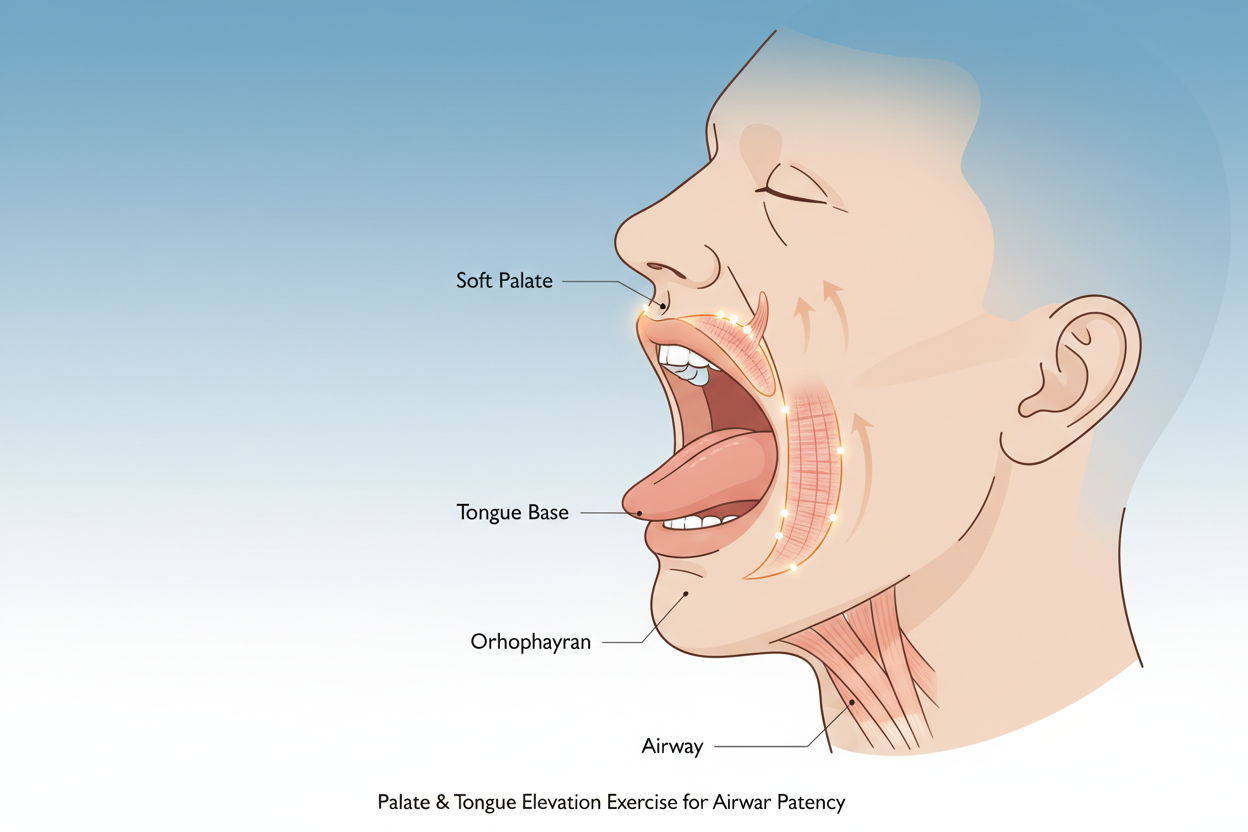
Before diving into the exercises, it’s essential to understand what we’re working with. Your upper airway consists of several muscle groups that work together to maintain proper breathing function. The primary players include the tongue muscles, soft palate muscles, pharyngeal muscles, and the muscles around your jaw and neck.
These muscles can become weak or lose coordination due to various factors including aging, weight gain, poor posture, or simply lack of use. When these muscles aren’t functioning optimally, you might experience snoring, sleep-disordered breathing, or even daytime fatigue due to poor sleep quality.
The good news is that like any other muscle in your body, these can be strengthened and retrained through targeted exercises. Research has shown that consistent upper airway muscle training can lead to significant improvements in breathing function and sleep quality within just a few weeks of regular practice.
The Science Behind Upper Airway Muscle Training
Multiple studies have demonstrated the effectiveness of oropharyngeal exercises in treating sleep-disordered breathing. A landmark study published in the American Journal of Respiratory and Critical Care Medicine found that patients who performed upper airway exercises for three months experienced a 39% reduction in sleep apnea severity and a 36% reduction in snoring frequency.
The mechanism behind these improvements is straightforward yet powerful. When you strengthen the muscles that control your tongue, soft palate, and throat, you’re essentially creating better structural support for your airway. This increased muscle tone helps prevent the collapse or narrowing that can lead to breathing difficulties during sleep.
What makes this approach particularly appealing is its accessibility. Unlike surgical interventions or medical devices, these exercises require no special equipment and can be performed virtually anywhere. They’re also completely natural and free from side effects when performed correctly.
12 Proven Upper Airway Strengthening Exercises
Tongue Strengthening Exercises
The tongue is perhaps the most important muscle in your upper airway system. These exercises focus on building strength and improving coordination of your tongue muscles.
Exercise 1: Tongue Push-Ups
Place the tip of your tongue against the roof of your mouth, just behind your front teeth. Apply firm pressure and hold for 5 seconds, then relax. This exercise strengthens the muscles that help keep your tongue in proper position during sleep. Perform 10 repetitions, three times daily.
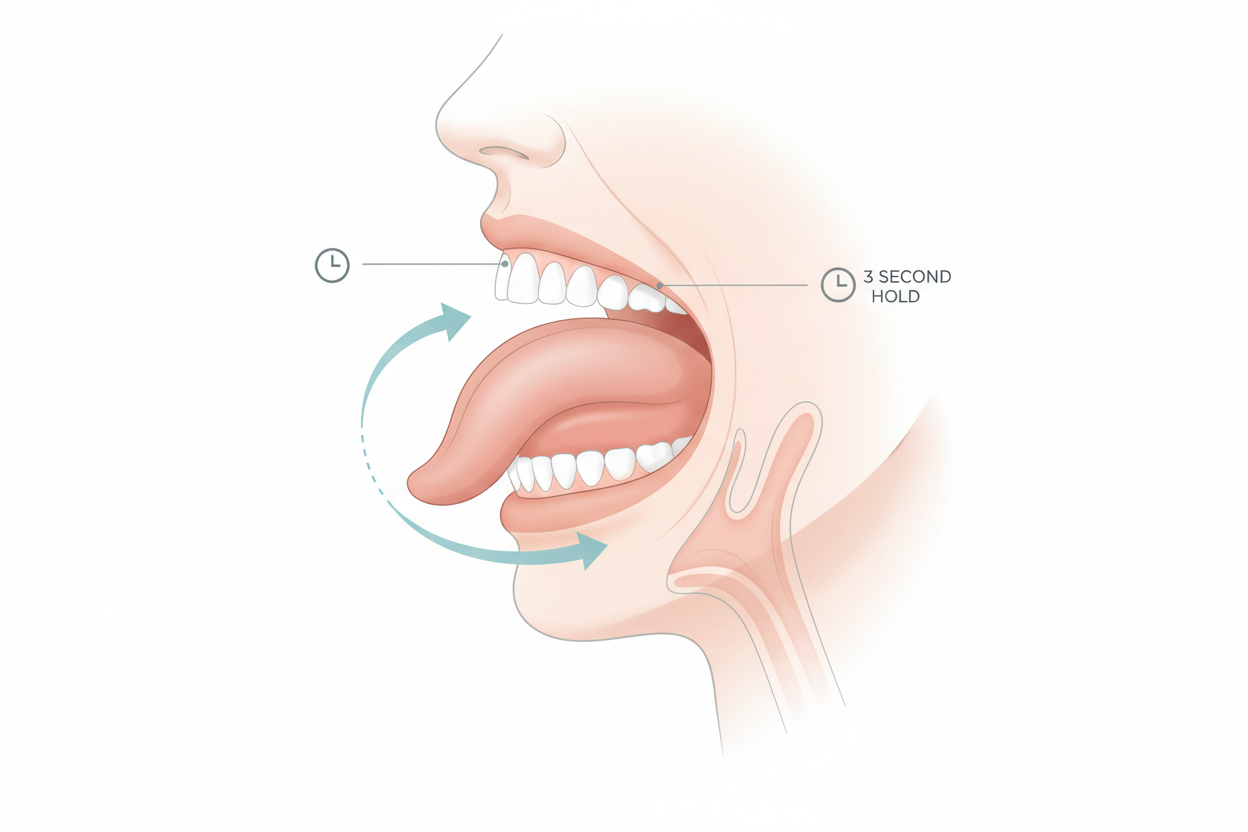
Exercise 2: Tongue Slides
Start with your tongue tip touching the back of your front teeth. Slowly slide your tongue backward along the roof of your mouth as far as it will comfortably go. Hold for 3 seconds, then return to the starting position. This exercise improves tongue flexibility and strength throughout its range of motion. Complete 10 slides, repeating three times per day.
Exercise 3: Tongue Resistance Training
Using a tongue depressor or clean spoon, gently press down on your tongue while trying to push it up against the resistance. Hold for 5 seconds, then relax. This creates targeted resistance training for your tongue muscles. Perform 10 repetitions twice daily, being careful not to apply excessive pressure.
Soft Palate Strengthening
Your soft palate plays a crucial role in preventing airway collapse. These exercises target the muscles that control this important structure.
Exercise 4: Vowel Pronunciation
Say the vowel sounds “A-E-I-O-U” in an exaggerated manner, opening your mouth wide and holding each sound for 3 seconds. This exercise engages the soft palate muscles and improves their coordination. The key is to really emphasize each vowel sound, making the movements deliberate and controlled. Repeat the sequence 10 times, twice daily.
Exercise 5: Soft Palate Elevation
Open your mouth and say “Ahh” as if you’re at the doctor’s office, but try to lift the back of your tongue and soft palate as high as possible. Hold this position for 5 seconds. You should feel the muscles at the back of your throat working. This directly strengthens the soft palate muscles that help keep your airway open. Perform 10 repetitions three times daily.
Throat and Pharyngeal Muscle Exercises
The muscles surrounding your throat and pharynx provide crucial support for maintaining an open airway during breathing and sleep.
Exercise 6: Swallowing Exercise
Swallow your saliva while pressing your tongue firmly against the roof of your mouth. Hold the tongue pressure for 5 seconds after swallowing. This exercise strengthens the coordinated muscle action needed for proper swallowing and airway control. Repeat 10 times, three times per day.
Exercise 7: Throat Muscle Contractions
Say the letter “K” sound repeatedly, focusing on the muscle contraction at the back of your throat. The movement should be deliberate and controlled, with a brief pause between each “K” sound. This targets the pharyngeal muscles that help maintain airway patency. Perform 20 repetitions twice daily.
Jaw and Facial Muscle Training
The position and strength of your jaw muscles can significantly impact your upper airway function, especially during sleep.
Exercise 8: Jaw Resistance
Place your thumb under your chin and gently push down while trying to open your mouth against the resistance. Hold for 5 seconds, then relax. This strengthens the muscles that control jaw position and can help prevent mouth breathing during sleep. Complete 10 repetitions twice daily, using only light resistance.
Exercise 9: Lateral Jaw Movement
With your mouth slightly open, move your jaw from side to side in a controlled manner. Hold the position at each side for 2 seconds before moving to the other side. This improves jaw muscle coordination and flexibility. Perform 10 movements in each direction twice daily.
Breathing Pattern Exercises
These exercises focus on improving the coordination between your breathing muscles and upper airway muscles.
Exercise 10: Nasal Breathing Focus
Consciously breathe through your nose only, keeping your mouth closed and tongue resting gently against the roof of your mouth. Practice this for 5 minutes at a time, gradually increasing the duration. This trains your body to maintain proper tongue position and nasal breathing patterns. Practice several times throughout the day.
Exercise 11: Controlled Exhalation
Take a deep breath through your nose, then exhale slowly through pursed lips while keeping your tongue pressed against the roof of your mouth. The exhalation should take twice as long as the inhalation. This exercise combines breathing control with upper airway muscle engagement. Perform 10 breath cycles twice daily.
Advanced Coordination Exercise
Exercise 12: Multi-Muscle Coordination
This exercise combines several elements: press your tongue against the roof of your mouth, breathe through your nose, and hum a low-pitched sound for 10 seconds. This comprehensive exercise engages multiple muscle groups simultaneously and improves overall coordination. Repeat 5 times, twice daily.
Creating Your Upper Airway Training Routine
Consistency is key when it comes to upper airway muscle training. Like any fitness program, you’ll see the best results when you make these exercises a regular part of your daily routine. Start with performing each exercise once daily, then gradually increase to the recommended frequency as your muscles adapt and strengthen.
Many people find it helpful to divide their exercises throughout the day rather than doing them all at once. You might do tongue exercises in the morning, soft palate exercises at lunch, and breathing exercises in the evening. This approach helps prevent fatigue and makes it easier to maintain consistency.
It’s also important to be patient with your progress. While some people notice improvements in their breathing and sleep quality within a few weeks, it typically takes 6-8 weeks of consistent practice to see significant changes. Remember, you’re retraining muscles that may have been weak or poorly coordinated for years.
Tips for Success and Safety
When starting your upper airway muscle training program, begin gently and gradually increase intensity. These muscles may be weak initially, and overdoing it can lead to soreness or discouragement. If you experience any pain during the exercises, reduce the intensity or consult with a healthcare professional.
Proper technique is more important than intensity. Focus on performing each exercise correctly rather than trying to do them as vigorously as possible. Quality movements will yield better results than rushed or improper technique.
Consider keeping a simple log of your exercises and any changes you notice in your breathing or sleep quality. This can help you stay motivated and track your progress over time. Many people are surprised by how much their breathing improves once they start paying attention to it.
When to Seek Professional Guidance
While upper airway muscle exercises are generally safe for most people, certain conditions warrant professional evaluation. If you have severe sleep apnea, chronic breathing difficulties, or any structural abnormalities of your mouth or throat, consult with a healthcare provider before beginning an exercise program.
A speech-language pathologist or respiratory therapist can provide personalized guidance and ensure you’re performing the exercises correctly. They can also modify the exercises based on your specific needs and limitations.
Additionally, if you don’t see any improvement after 8-10 weeks of consistent practice, it may be worth seeking professional evaluation to rule out other underlying causes of your breathing difficulties.
Conclusion
Upper airway muscle training represents a promising, natural approach to improving breathing function and sleep quality. These twelve exercises offer a comprehensive program for strengthening the muscles that control your airway, potentially reducing snoring, improving sleep, and enhancing overall respiratory health.
The beauty of this approach lies in its simplicity and accessibility. With no equipment required and exercises that can be performed anywhere, you have the tools to take control of your breathing health. Remember that consistency is more important than perfection – even a few minutes of daily practice can lead to meaningful improvements over time.
As you embark on this journey to stronger breathing, be patient with yourself and celebrate small victories along the way. Better breathing is not just about better sleep; it’s about improved quality of life, increased energy, and better overall health. Your upper airway muscles are ready to get stronger – all they need is your commitment to regular training.
Take Control of Your Nighttime Breathing
Don’t let sleep apnea silently accelerate your lung disease. Discover the natural breathing protocol that thousands of respiratory patients are using to restore healthy sleep patterns and protect their lung function.
