

5-Minute Morning Routine: Breathing Exercises for Sleep Apnea Recovery
Starting your day with intention can make all the difference, especially when you’re managing sleep apnea. If you’ve been struggling with restless nights and groggy mornings, you’re not alone. Sleep apnea affects millions of people worldwide, disrupting not just sleep quality but overall well-being. The good news? A simple 5-minute morning breathing routine can become your secret weapon in the journey toward better sleep and recovery.
While CPAP machines and medical treatments remain essential for managing sleep apnea, incorporating targeted breathing exercises into your morning routine can strengthen your respiratory muscles, improve oxygen flow, and set a positive tone for the entire day. These aren’t just random breathing techniques – they’re specifically chosen exercises that address the underlying muscle weakness and breathing patterns associated with sleep apnea.
Understanding the Connection Between Morning Breathing and Sleep Apnea Recovery
Sleep apnea occurs when your airway becomes partially or completely blocked during sleep, causing breathing interruptions that can happen dozens or even hundreds of times per night. These episodes leave you feeling exhausted, regardless of how many hours you spent in bed. Your body works overtime trying to maintain proper oxygen levels, and your respiratory muscles become fatigued.
Morning breathing exercises work by strengthening the muscles that keep your airway open, improving lung capacity, and training your body to breathe more efficiently. Think of it as physical therapy for your breathing system. Just as you might do stretches to prevent back pain, these exercises help prevent the muscle weakness that contributes to airway collapse during sleep.
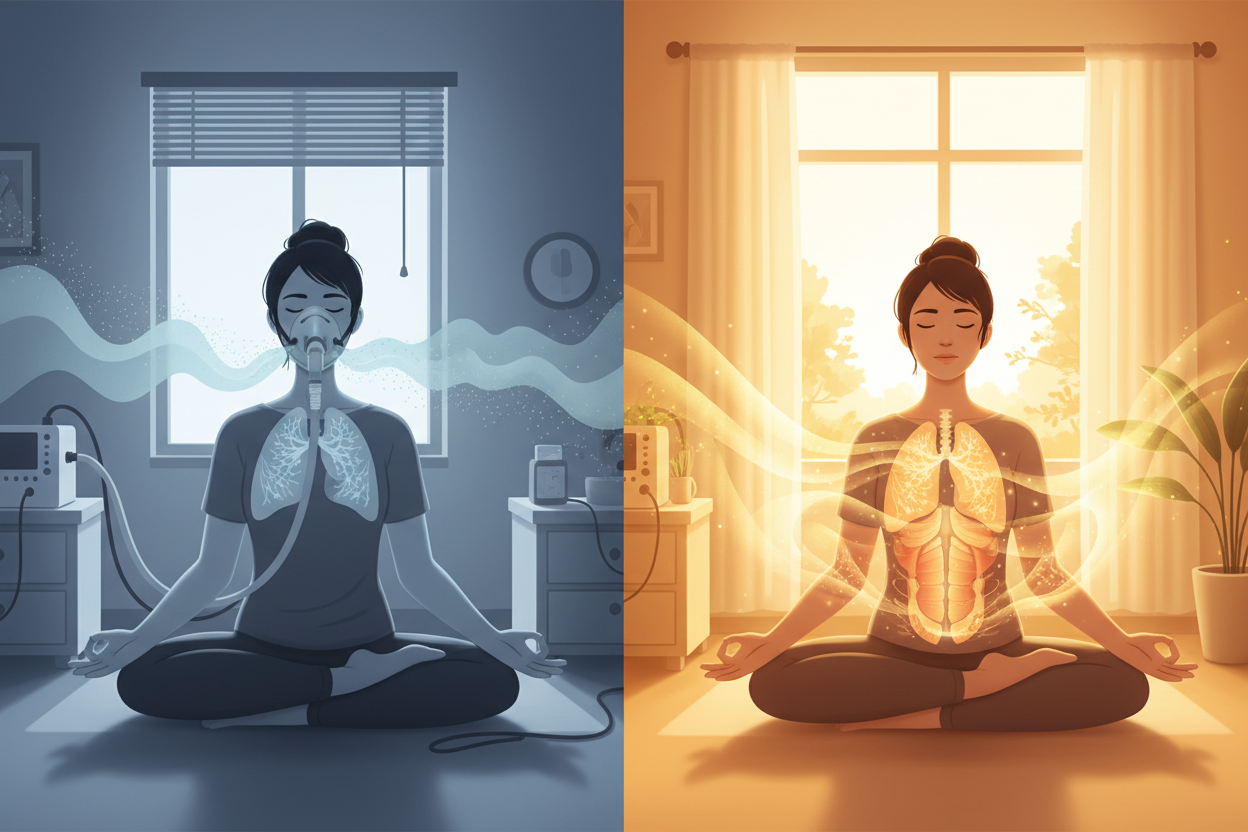
Research has shown that regular breathing exercises can reduce the severity of sleep apnea symptoms and improve overall sleep quality. When combined with traditional treatments, these exercises create a comprehensive approach to managing your condition. The morning timing is particularly beneficial because it helps clear any residual congestion from sleep and energizes your respiratory system for the day ahead.
The Complete 5-Minute Morning Breathing Routine
This routine is designed to be simple enough to do immediately upon waking, yet effective enough to make a real difference in your sleep apnea management. You don’t need any special equipment – just a comfortable place to sit or lie down and five minutes of your time.
Exercise 1: Diaphragmatic Breathing (90 seconds)
Diaphragmatic breathing, also known as belly breathing, is the foundation of healthy respiratory function. Many people with sleep apnea have developed shallow, chest-based breathing patterns that don’t fully engage the diaphragm – your body’s primary breathing muscle.
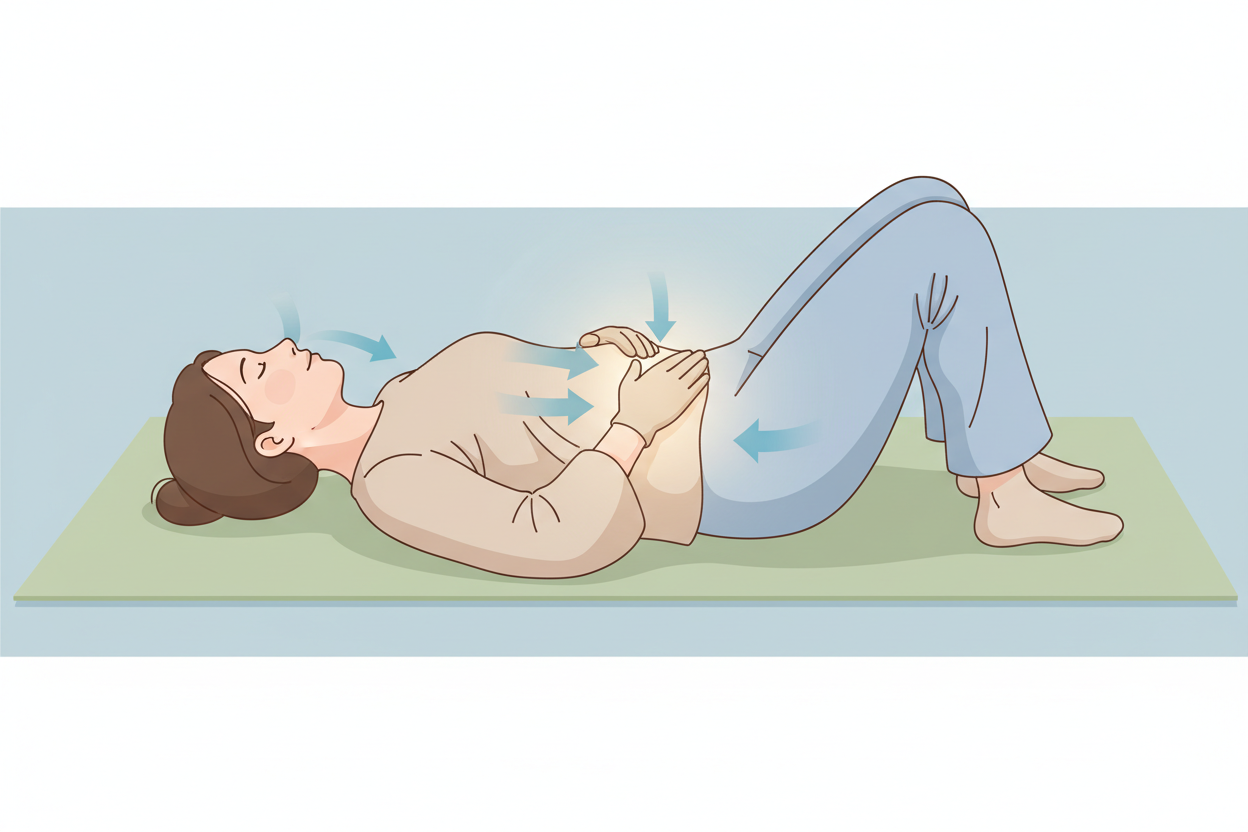
Start by lying on your back or sitting comfortably with your feet flat on the floor. Place one hand on your chest and the other on your belly, just below your ribcage. Take a slow, deep breath through your nose, focusing on expanding your belly rather than your chest. The hand on your belly should rise significantly while the hand on your chest barely moves.
Exhale slowly through slightly pursed lips, feeling your belly fall as the air leaves your lungs. Continue this pattern for 90 seconds, aiming for breaths that last about 4 seconds in and 6 seconds out. This exercise strengthens your diaphragm and helps establish proper breathing mechanics that carry over into sleep.
Exercise 2: Tongue and Throat Strengthening (60 seconds)
The muscles in your tongue and throat play a crucial role in keeping your airway open during sleep. When these muscles are weak or poorly coordinated, they’re more likely to collapse and cause breathing obstructions. This exercise targets those specific muscle groups.
Begin by pressing your tongue firmly against the roof of your mouth, as if you’re trying to suction it in place. Hold this position for 3 seconds, then relax. Repeat this 10 times. Next, stick your tongue out as far as possible and try to touch your chin with the tip. Hold for 3 seconds and repeat 5 times.
Finally, open your mouth wide and say “ahh” as if you’re at the doctor’s office, but hold the position for 5 seconds while breathing normally through your nose. This stretches and strengthens the soft palate and throat muscles. Complete this sequence within 60 seconds, moving smoothly between each exercise.
Exercise 3: Box Breathing for Airway Control (90 seconds)
Box breathing, used by everyone from Navy SEALs to meditation practitioners, helps improve respiratory control and reduces stress – both important factors in sleep apnea management. This technique teaches your body to maintain steady, controlled breathing patterns.
Sit up straight and exhale completely through your mouth. Close your mouth and inhale through your nose for a count of 4. Hold your breath for a count of 4. Exhale through your mouth for a count of 4. Hold empty for a count of 4. This completes one “box” – continue for about 6-8 complete cycles over 90 seconds.
The key is maintaining the same count for each phase, creating a square or “box” pattern. If counting to 4 feels too challenging initially, start with a count of 3 and gradually work up. This exercise improves your ability to control airflow and can help prevent the erratic breathing patterns that sometimes trigger sleep apnea episodes.
Exercise 4: Humming Breath (60 seconds)
This final exercise might seem unusual, but humming creates vibrations that help strengthen the soft palate and improve muscle tone in your throat. It’s also incredibly calming and can help reduce morning stress that might affect your breathing throughout the day.
Take a comfortable breath in through your nose. As you exhale, close your mouth and create a gentle humming sound – like “mmm” – for the entire length of your exhale. The vibration should be felt in your chest, throat, and even your sinuses. Continue this pattern for 60 seconds, focusing on creating a steady, pleasant hum with each exhale.
The humming helps clear nasal passages, strengthens respiratory muscles, and creates a meditative quality that can improve your overall morning mindset. Many people find this exercise particularly soothing and energizing at the same time.
Tips for Success and Consistency
Like any beneficial habit, the key to success with morning breathing exercises lies in consistency rather than perfection. Start by committing to just three days a week if daily practice feels overwhelming. You can always increase frequency as the routine becomes more natural.
Keep a small notebook or use your phone to track your practice. Note how you feel before and after the exercises – many people report feeling more alert, less congested, and generally more positive about their day. These small victories can provide powerful motivation to continue.
If you use a CPAP machine, you can still do these exercises, but wait until after you’ve removed your mask and equipment. Some people find it helpful to do a shortened version of the routine before putting their CPAP on at night as well.
Remember that breathing exercises are complementary to, not a replacement for, medical treatment. Always work with your sleep specialist or healthcare provider to ensure you’re getting comprehensive care for your sleep apnea.
Tracking Your Progress and Long-Term Benefits
The benefits of consistent morning breathing exercises extend far beyond just sleep apnea management. Many practitioners report improved energy levels throughout the day, better stress management, and even enhanced athletic performance. Your respiratory system becomes more efficient, which can improve everything from your workout capacity to your ability to handle daily stressors.
Keep track of your sleep quality using whatever method works best for you – whether that’s a sleep tracking app, a simple journal, or notes about how rested you feel each morning. Over time, you may notice patterns that help you understand which exercises are most beneficial for your specific situation.
Pay attention to other improvements too: reduced morning headaches, less daytime fatigue, improved mood, or better concentration. These secondary benefits often motivate people to stick with their breathing routine even when the direct sleep improvements are subtle.
Conclusion
Investing just five minutes each morning in targeted breathing exercises can be a game-changer for your sleep apnea recovery journey. These simple yet effective techniques work by strengthening the very muscles and systems that sleep apnea affects most. While they’re not a cure-all, they’re a powerful tool that costs nothing, requires no equipment, and can be done anywhere.
The beauty of this routine lies in its simplicity and adaptability. Whether you’re traveling, running late, or just starting your sleep apnea treatment journey, these exercises can fit into virtually any lifestyle. Start tomorrow morning – your future self will thank you for taking this small but significant step toward better sleep and improved health.
Remember, recovery is rarely linear, and small, consistent actions often create the most lasting change. Your five-minute morning breathing routine might just become the foundation for not only better sleep but a more energized, healthier version of yourself.
Take Control of Your Nighttime Breathing
Don’t let sleep apnea silently accelerate your lung disease. Discover the natural breathing protocol that thousands of respiratory patients are using to restore healthy sleep patterns and protect their lung function.
